
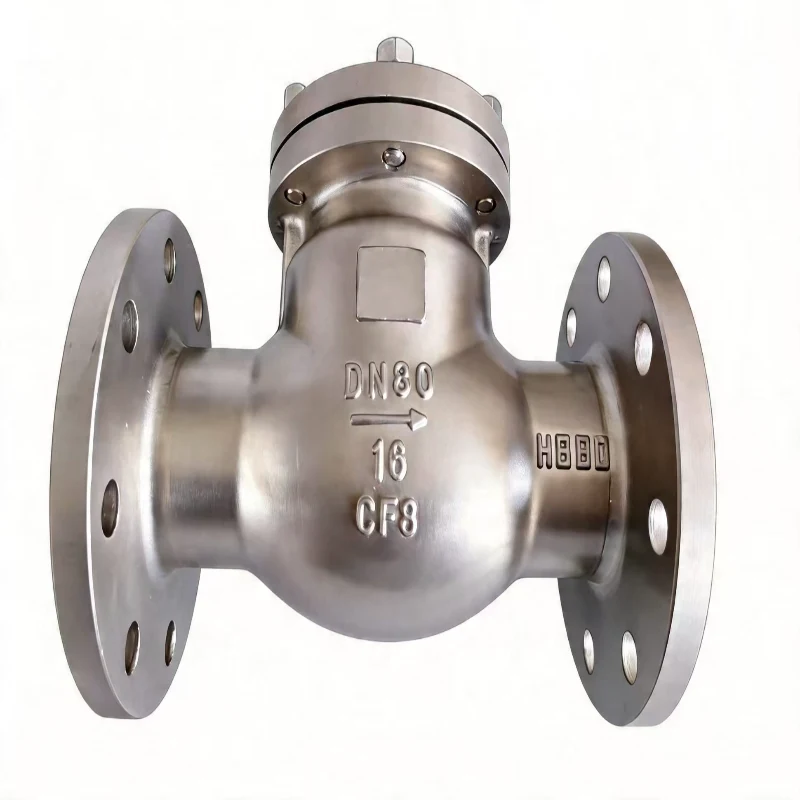
Flanged Check Valve
Flanged Check valves from manufacturer Bolaisi are fully automatic industrial valves designed to prevent backflow; they open and close automatically based on the pressure of the medium itself, requiring no manual intervention, electrical controls, or manual operation. Their core functions include allowing unidirectional flow, completely blocking backflow, protecting pipeline equipment, and preventing water hammer impact.
Bolaisi Valve offers a comprehensive range of check valves—including swing, lift, vertical, wafer, butterfly, silent, and disc types—suitable for media such as water, steam, and oil. These products are designed for low-, medium-, and high-pressure as well as high-temperature operating conditions. They support export customization, undergo full factory pressure testing, ensure zero leakage and high stability, and are widely used in global engineering projects.
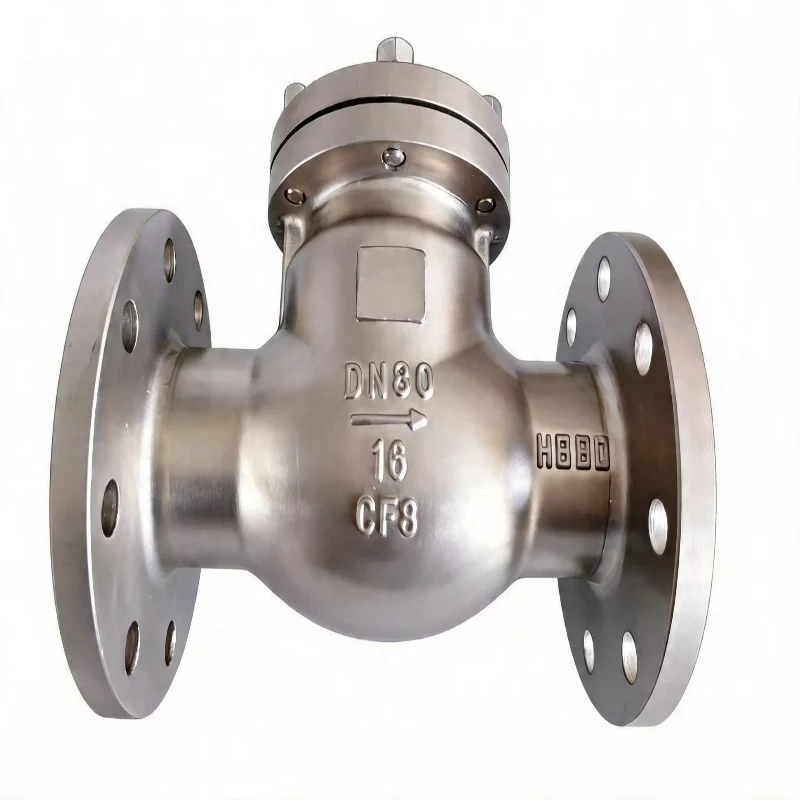
Product Definition
Flanged Check valves are automatic protective pipeline valves that operate based on fluid pressure differentials. Forward flow pushes the valve disc open, allowing smooth passage; conversely, if backflow, pressure reversal, or negative pressure (due to system shutdown) occurs, the disc closes instantly and automatically, completely blocking the reverse flow.
Operating entirely automatically—without manual intervention, external power consumption, or moving external parts—these valves are essential safety components for preventing backflow and water hammer, protecting pumps, and avoiding equipment damage caused by reverse flow. They are widely used at pump outlets, in boiler lines, return lines, branch lines, municipal networks, and chemical process piping, serving as a critical valve type for industrial pipeline safety.
Product Classification and Key Specifications
Mainstream Product Series
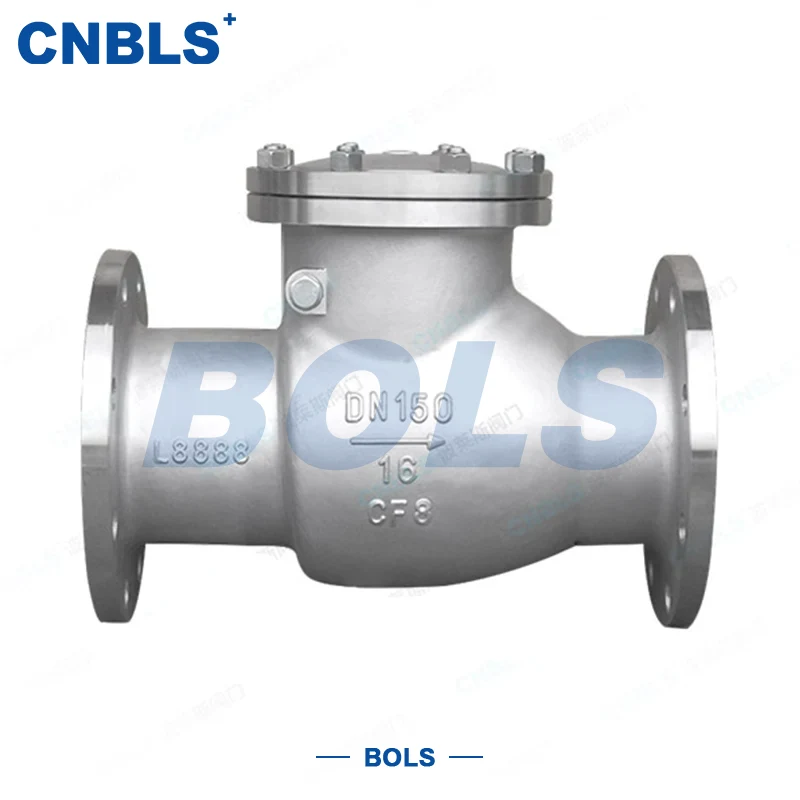
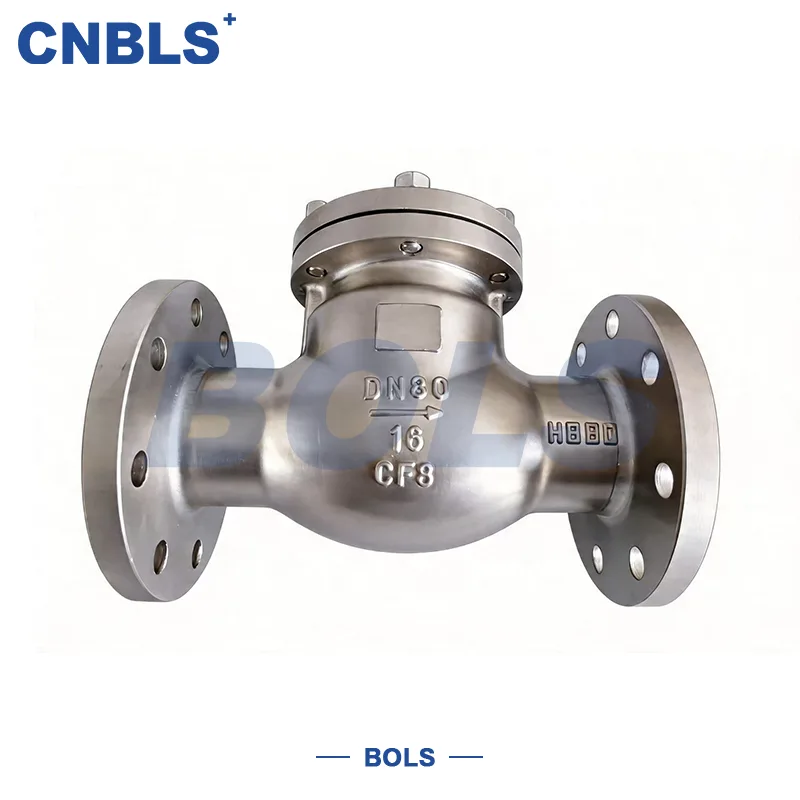
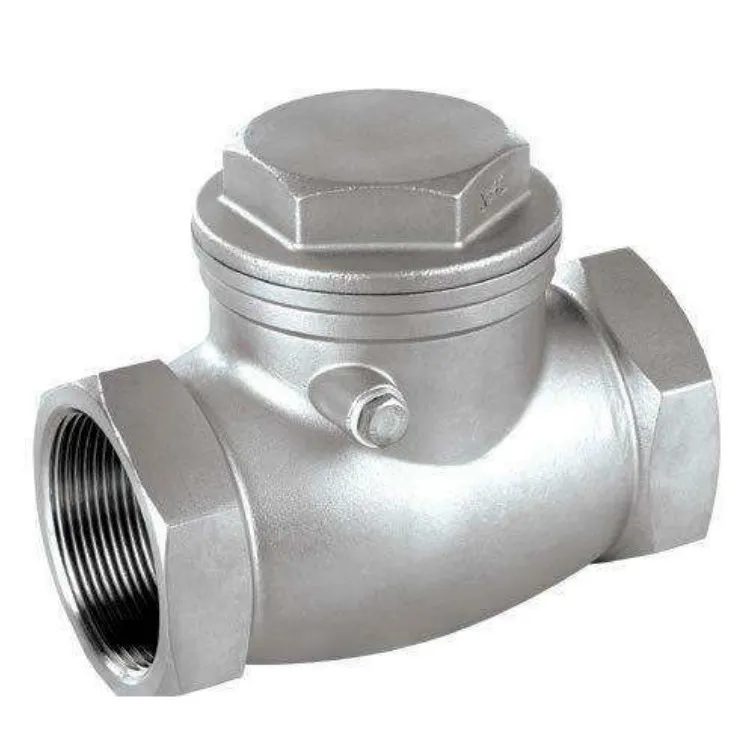
1. Swing Check Valve (H44): Large bore, large flow passage, low flow resistance; suitable for main pipelines carrying water, oil, or sewage.
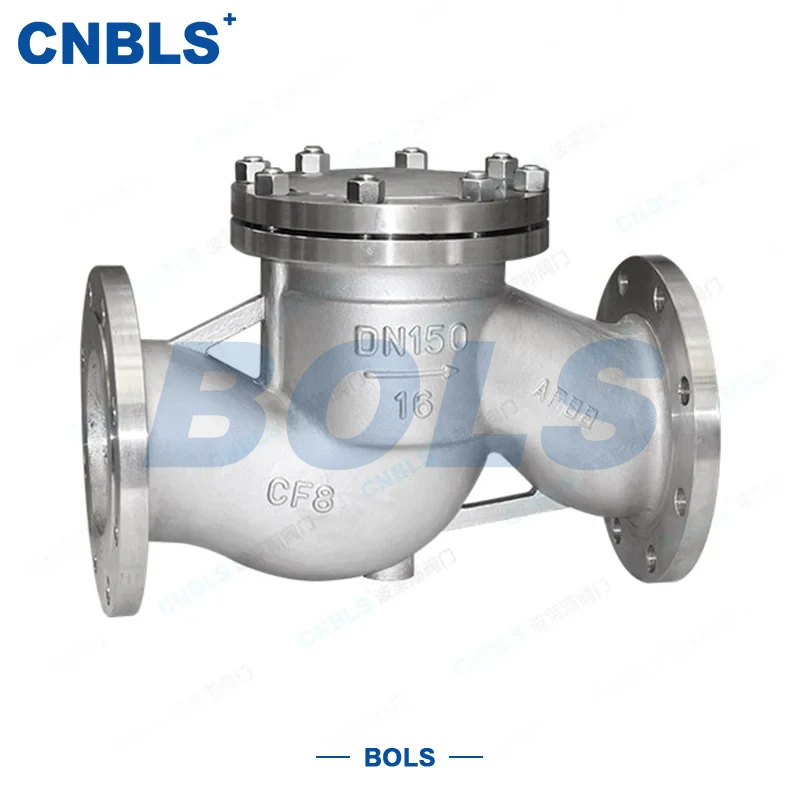
2. Lift Check Valve (H41): High sealing precision, zero leakage; suitable for fine chemical and high-pressure process pipelines.
3. Vertical Check Valve (H42): Designed for vertical pipelines; sensitive backflow prevention.
4. Wafer Check Valve (H74): H74 Long-pattern Wafer Check Valve: Large-bore pipelines, high-pressure conditions, high-temperature steam, oil & gas, and industrial media with minor impurities.
H74 Thin-pattern Wafer Check Valve: Applications with limited installation space or compact piping layouts (internal equipment, narrow pipe shafts, high-rise water supply/drainage).
5. Butterfly Check Valve (H76/H77): Thin and lightweight, low cost, quick installation; suitable for fire protection and water supply/drainage systems.
6. Silent Check Valve (HC41): Small-scale industrial pipelines for clean water or mildly corrosive liquids.
7. Disc Check Valve (H46): Large-bore process pipelines for municipal water supply/drainage, sewage networks, seawater circulation systems, chemical plants, power plants, and metallurgy.
8. Quiet Check Valve (HC42): Shock-free closure, prevents water hammer; designed for high-rise buildings and pump rooms.
Technical Specifications
|
Parameter Item |
Technical Specifications |
|
Product Name |
Flanged Check Valve (One-way Valve, Non-return Valve) |
|
Common Models |
H41, H44, H42, H76, H77, H74, H46, HC41, HC42 |
|
Connection Type |
Flanged, Wafer |
|
Nominal Diameter |
DN15–DN1200 |
|
Pressure Rating |
PN10/PN16/PN25/PN40/PN64; Class 150/300/600 |
|
Body Material |
WCB Carbon Steel, 304 (CF8), 316 (CF8M), 316L (CF3M) |
|
Trim Material |
2Cr13, Stainless Steel Disc, Stellite Alloy Sealing |
|
Sealing Type |
Metal-to-Metal (Hard) Seal, Soft Seal |
|
Applicable Temperature |
-29°C to 550°C |
|
Applicable Media |
Fresh water, sewage, steam, heat transfer oil, petroleum products, natural gas, weak acids/alkalis, chemical fluids |
|
Product Features |
Fully automatic opening/closing, backflow prevention, water hammer protection, zero energy consumption, maintenance-free |
Differences and characteristics of various check valves
1. General structural composition
The overall structure of the check valve is simple and stable, comprising five core components: valve body, valve seat, disc, pin/spring assembly, and sealing pair.
No gears, handwheels, or actuators; the structure has an extremely low failure rate and is virtually maintenance-free.
2. Structural Characteristics of Various Check Valves
H41 Lift Check Valve
Structure: Flanged connection; disc lifts vertically; features an integrated guide sleeve.
H42 Vertical Check Valve
Structure: Right-angle configuration (90° inlet/outlet); designed specifically for vertical installation.
H44 Flanged Swing Check Valve
Structure: Flanged connection; single-piece disc on a swing arm opens and closes via a swinging motion.
H46 Butterfly Check Valve (Dual-purpose: Flanged/Wafer)
Structure: Wafer or flanged mounting; features two butterfly-style disc halves that open and close synchronously via a torsion spring.
H74 Wafer Check Valve (Available in thin/short and long series)
Structure: Ultra-thin single-disc design with a spring; secured by clamping between two flanges.
H76 Butterfly-style Check Valve
Structure: Wafer-style mounting; single-arm swing mechanism (essentially a wafer version of the H44).
H77 Butterfly-style Check Valve (Ultra-thin/Short type)
Structure: Compact wafer-style dual-disc design; thinner profile than the H46.
HC41 Silent Check Valve
Structure: Flanged vertical type; conical disc with a strong pre-loaded spring for rapid closure.
HC42 Silent Check Valve
Structure: Right-angle configuration with spring-assisted lift mechanism; a silent-operation model designed for vertical pipelines.
Application Areas
1. Municipal Water Supply and Drainage
Urban water supply networks, secondary water supply pump rooms, sewage treatment pipelines, and pump station discharge outlets; prevents backflow damage to pumps during shutdown.
2. Fire Protection Systems
Fire sprinkler main lines, pressure-maintenance pump piping, and pump room units; prevents high-pressure water backflow and ensures stable network pressure and safety.
3. Thermal and Power Industries
Steam pipelines in thermal power plants, hot water circulation systems, and boiler discharge piping; prevents backflow of steam or high-temperature water from damaging equipment.
4. Petrochemical Industry
Oil transport pipelines, chemical fluid process piping, and acid/alkali transport systems; protects reaction vessels, pump bodies, and instrumentation equipment.
5. High-rise Buildings and Construction Projects
High-rise water supply risers and booster pump piping; prevents water hammer, reduces noise, stabilizes pressure, and prevents backflow.
6. Environmental Protection, New Energy, and Gas Systems
Exhaust gas treatment equipment, natural gas transport pipelines, and circulating fluid systems; ensures stable, unidirectional flow within the piping.
Guide to Precise Check Valve Selection
Step 1: Consider the medium (eliminates half of the model options)
1. Clean water/pure water (no impurities): All models suitable; for quiet operation → HC41; for space-saving → H74/H77
2. Sewage/water with sediment or impurities: HC41/HC42/H74 prohibited; prioritize H44, H46, H76
3. High-temperature steam (>120°C): All spring-loaded models with soft rubber seals (HC series, H74) prohibited; select H41 or H44 with metal-to-metal hard seals
4. Corrosive chemical media: Upgrade valve body to 304/316 stainless steel; prioritize H41 or H46 structures
Step 2: Consider installation space
1. Extremely limited space: Prioritize wafer types—H74 > H77 > H46
2. Standard pump rooms/flanged piping (no space constraints): Flanged models HC41, H44, H46
3. Fixed vertical 90° right-angle piping layout: Select H42 or HC42
Step 3: Core requirements—need to eliminate water hammer or noise?
1. Quiet operation and water hammer prevention required (residential water supply/pump rooms below apartments): HC41 preferred; H74 for tight spaces; HH46 slow-closing model for large, high-power pumps
2. Slight water hammer acceptable; focus on flow capacity and durability: H44, H46, H76
3. High-pressure process piping (noise not a concern): H41 hard-sealed lift check valve
Step 4: Installation orientation constraints
1. Suitable for horizontal or vertical-up installation: HC41, H41, H46, H74, H77
2. Vertical installation only: H42, HC42
3. Vertical-down installation prohibited: All swing-type valves H44/H46/H76 (Gravity-assisted closure)
Key Selling Points of Bolais Check Valves
1. Fully automatic, maintenance-free design
No operating mechanisms or easily worn parts; automatic backflow prevention; requires no routine maintenance over its lifespan, significantly reducing engineering O&M costs.
2. Rigorous factory testing
Every Flanged check valve undergoes shell pressure testing and reverse-pressure seal testing to eliminate backflow, micro-leakage, and pressure loss issues.
3. Comprehensive material and specification coverage
Available in carbon steel, stainless steel, and ultra-low carbon 316L; precisely matched to any operating condition—no underspecification or waste.
4. Stable sealing and strong water hammer resistance
Optimized disc counterweight and spring tension ensure rapid yet gentle closure, eliminating pipeline water hammer, impact noise, and vibration.
5. Compliant with global export standards
Full sets of export documentation, commodity inspection reports, and material spectral analysis reports available.
6. Direct factory supply with ample stock
Large inventory of standard models; supports urgent orders, full-container export orders, and non-standard customization.
FAQ
Q1: Can Flanged Check Valves regulate flow rate?
A: No, they cannot regulate flow. The sole function of a check valve is to allow unidirectional flow and prevent backflow; it is a safety protection valve and does not possess throttling or pressure-regulating capabilities.
Q2: Are there specific installation direction requirements?
A: Yes. The valve body features a flow direction arrow; installation must align with the medium's flow direction. Vertical pipelines require specific vertical-installation check valves.
Q3: Are check valves prone to failure? Do they require frequent maintenance?
A: Check valves feature a minimalist structure without complex transmission components, resulting in extremely low failure rates and virtually maintenance-free operation; they are among the most stable valve types for industrial pipelines.
Q4: Can check valves be used for sewage or media containing silt/sediment?
A: Yes. Swing check valves are the preferred choice; they offer a wide flow path that resists clogging, making them suitable for media containing trace impurities.
Q5: Which type of check valve is used for high-temperature steam applications?
A: For high-temperature steam, we recommend WCB carbon steel hard-sealed swing-type or lift-type check valves; they offer high-temperature resistance, erosion resistance, and dimensional stability.
Q6: Do you support customization for export and provide the necessary documentation?
A: Yes, we support customization according to global standards and can provide a full set of documents, including certificates of conformity, pressure test reports, material analysis reports, operation manuals, customs clearance documentation, etc.
Hot Tags: Flanged Check Valve, Manufacturer, Supplier, Factory
Related Category
Send Inquiry
Contact Info
-
Address
638 Binhai 9th Road, Longwan District, Wenzhou City, Zhejiang Province, China
-
Tel
-
Email
For inquiries about our products or pricelist, please leave your email to us and we will be in touch within 24 hours.
Related Products
News Recommendations