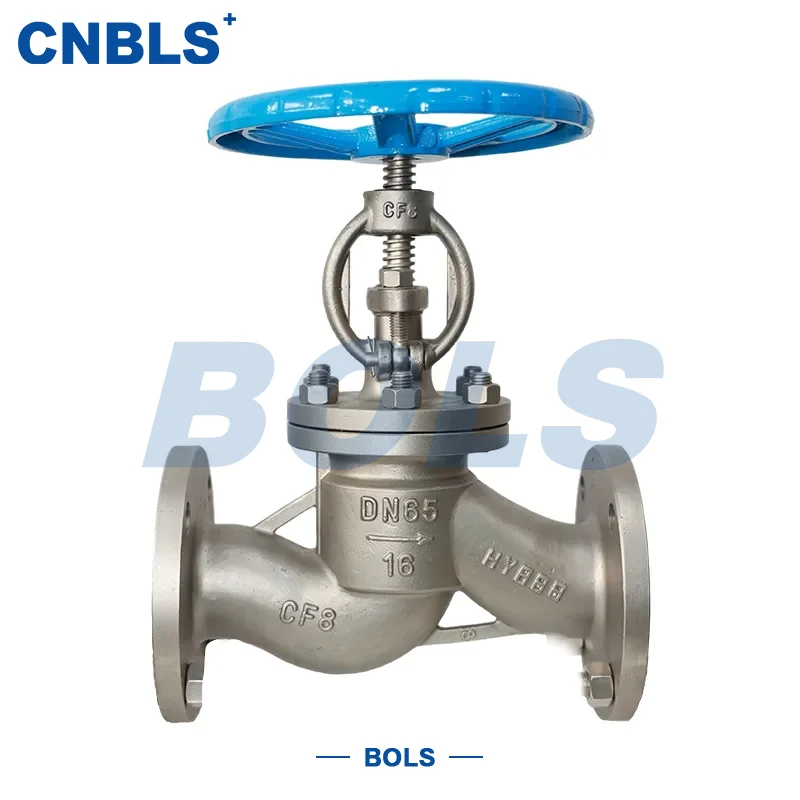

What is a stainless steel globe valve? Why is it one of the most widely used types of industrial valves?
Abstract:The closing mechanism of a stainless steel globe valve relies on the pressure exerted by the valve stem to force the sealing surface of the disc tightly against the sealing surface of the seat, thereby preventing the flow of the medium. This article provides a detailed explanation of the working principle, classification, applications, advantages, and disadvantages of globe valves, as well as guidance on selecting the appropriate valve. It also offers a comprehensive selection guide and practical maintenance recommendations.
Table of Contents:
-
What Is a Stainless Steel Globe Valve?
-
How Does a Stainless Steel Globe Valve Work?
-
What Types of Stainless Steel Globe Valves Are Available?
-
Where Are Stainless Steel Globe Valves Used?
-
How to Choose the Right Material for a Globe Valve.
-
How to Choose the Right Globe Valves.
-
Advantages and Disadvantages of Stainless Steel Globe Valves.
-
Maintenance and Troubleshooting Tips.
-
Frequently Asked Questions.
-
Conclusion
-
What Is a Stainless Steel Globe Valve?
Simply put, a stainless steel globe valve is a valve made of stainless steel that is used to “shut off or open the flow of fluid in a pipeline.” It controls the flow and flow rate by using a stem to raise and lower the disc. Its sealing performance relies on the tight contact between the disc and the seat, and it is classified into soft-seal and hard-seal types. It is an extremely important type of shut-off valve.
-
How Does a Stainless Steel Globe Valve Work?
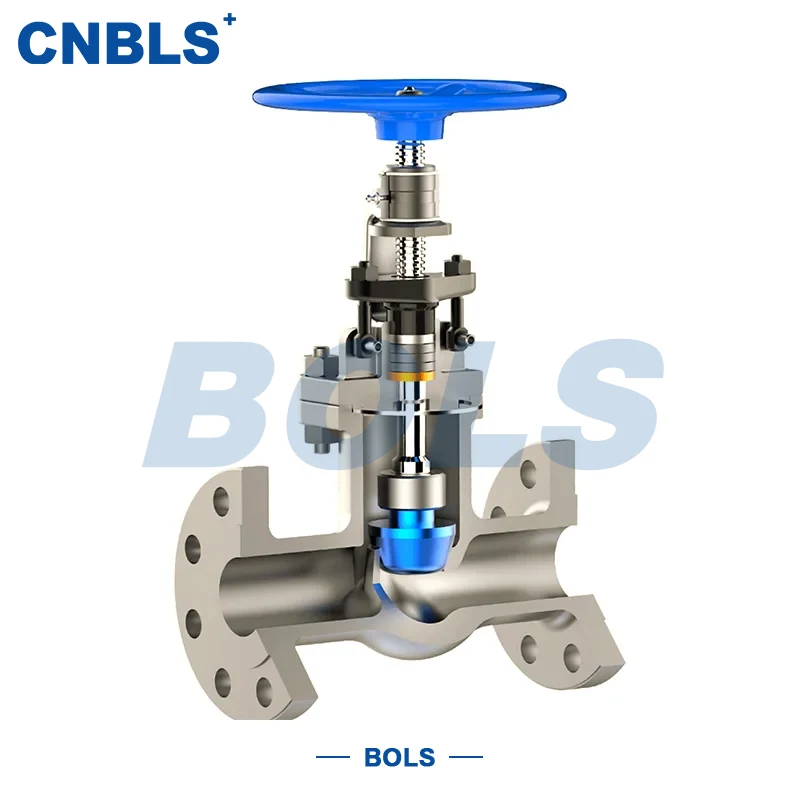
The operating principle of a globe valve primarily relies on the vertical up-and-down movement of the disc to control fluid flow and regulate flow rate. At its core, the valve functions by rotating the stem to move the disc axially along the sealing surface of the seat, thereby altering the cross-sectional area of the flow passage to achieve control. To open the valve, turn the handwheel counterclockwise; the stem lifts the disc upward, gradually moving it away from the seat and opening the flow passage. The fluid enters through the inlet of the valve body and flows around the disc. Due to the S-shaped profile of the globe valve, the flow follows a path where it enters at a lower elevation and exits at a higher elevation. Therefore, by controlling the lift height of the disc, the flow rate can be precisely adjusted (the stroke of the valve and the flow rate have an approximately linear relationship). To close the valve, turn the hand-wheel clockwise; the stem pushes the disc downward. Sealing is achieved through the tight contact between the disc and the seat surface. Ultimately, the disc presses firmly against the seat sealing surface, completely blocking the flow path.
-
What Types of Stainless Steel Globe Valves Are Available?
Stainless steel globe valves can be classified based on their structure, connection type, actuation method, and sealing type.
1. Classification by Structure:
① Straight-through stainless steel globe valves
② Angle-type stainless steel globe valves
③ Direct-flow/plunger-type stainless steel globe valves
④ Bellows-type stainless steel globe valves
2. Classification by Connection Type:
① Threaded stainless steel globe valves (screw-type stainless steel globe valves)
② Flange stainless steel globe valves
③ Welded stainless steel globe valves
3. Drive Types:
① Manual stainless steel globe valves
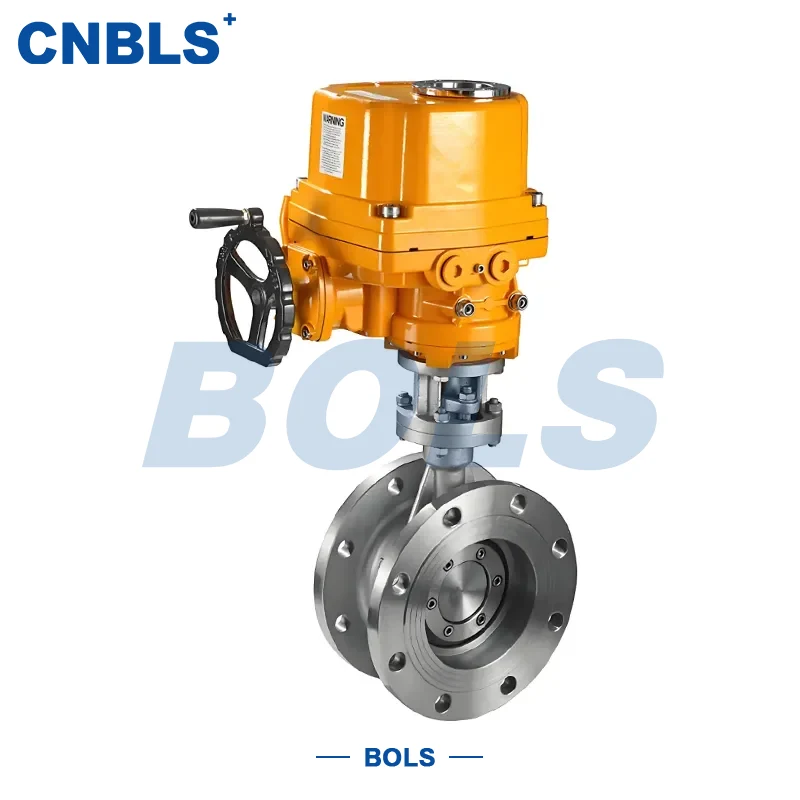
② Electric stainless steel globe valves
③ Pneumatic stainless steel globe valves
4. Sealing Types:
① Soft-seal stainless steel globe valve
② Hard-seal stainless steel globe valve
-
Where Are Stainless Steel Globe Valves Used?
Thanks to their excellent corrosion resistance, high strength, and hygienic properties, stainless steel globe valves offer irreplaceable advantages in specific applications. Below is a detailed breakdown of their primary applications:
1. Chemical Engineering and Petrochemicals
2. Pharmaceutical and Biotechnology
3. Food and Beverage
4. New Energy and Electronics
5. Marine and Naval Engineering
6. Power and Heating
-
How to Choose the Right Material for a Globe Valve.
The selection of materials for globe valves directly affects the valve’s service life, sealing reliability, and operational safety, and requires a comprehensive consideration of the characteristics of the medium, temperature, pressure, operating conditions, and industry standards.
First, select the material based on the corrosive of the medium.For common media such as water and oils, cast steel is a suitable choice; for highly corrosive media such as acids, alkalies, and seawater, 304 or 316 stainless steel is the preferred option; and in extremely corrosive environments, special alloys such as duplex stainless steel can be selected.
Second, materials should be matched to temperature. For high-temperature applications, heat-resistant cast steel or stainless steel should be selected; for low-temperature media, low-temperature stainless steel or low-temperature alloy steel must be used to prevent cold brittleness.Next, pressure ratings must be considered. Cast iron or brass can be used for low-pressure pipelines; medium- and high-pressure systems must use forged steel or high-strength stainless steel to ensure the valve body remains pressure-resistant and does not deform.
At the same time, hygiene requirements must be taken into account. The food, pharmaceutical, and pure water industries require sanitary-grade stainless steel with a smooth, residue-free surface that meets cleanliness standards.
Finally, prioritize safety and reliability. While meeting operational requirements, comprehensively consider cost and service life to avoid leaks caused by under-specification or increased costs due to over-specification. Scientific material selection can significantly extend valve service life and ensure system operational safety.
-
How to Choose the Right Globe Valve.
First, determine the basic parameters
Medium: What is it? (Water, steam, oil, chemicals)
Temperature: What is the maximum temperature in degrees Celsius? (200°C, 250°C, 300°C)
Pressure: What is the maximum pressure? (10 p–100 p)
Nominal diameter: What is the nominal diameter? (DN15–DN400)
Step 2: Select Materials and Design Based on Application Requirements (Usage Scenarios)
· What material should be used?
For standard water, mildly corrosive environments, food, and pharmaceutical applications, choose 304 stainless steel.
For environments containing chloride ions (e.g., brine, seawater, bleach), chemical processing, and coastal environments, choose 316/316L stainless steel.
· What type of seal should be used?
Soft seal (e.g., PTFE): Suitable for ambient temperatures and non-particulate media; requires zero leakage; not heat-resistant.
Hard seal (metal): Suitable for high temperatures, high pressure, and media containing particles or subject to mild erosion; offers greater wear resistance and durability.
· What type of configuration?
Straight-through: (Standard type) General-purpose, infrequent operation.
In-line: (Y-type) Designed to minimize pressure loss (e.g., pump discharge, long pipelines), easier to operate.
Angle: For pipelines requiring a 90° turn; can replace an elbow.
Step 3: Determine the Installation Method
· Connection Methods:
Threaded Connection:Small diameters (DN ≤ 50); simple installation.
Threaded Connection: Most commonly used; easy to install and remove; reliable sealing.
Welded:Requires absolute leak-tightness (e.g., high-temperature, high-pressure steam; hazardous media).
· Operating Methods:
Hand-wheel Operation:Manual operation; most common.
Electric/Pneumatic Operation: Required for remote, automatic, or frequent on/off operations.
-
Advantages and Disadvantages of Stainless Steel Globe Valves.
Advantages:
1. Exceptional corrosion resistance (key advantage)
2. Excellent hygiene and cleanliness. Non-toxic, non-contaminating, and non-adsorbent; smooth surface resists scaling and is easy to clean and sterilize.
3. Good mechanical properties.
4. Aesthetically pleasing and durable.
5. Wide range of applications.
6. Pure material.
Disadvantages:
1. High fluid resistance; requires significant force to open and close.
2. Not suitable for media containing particles, high viscosity, or prone to coking.
3. Poor regulating performance.
4. Not “rust-proof.”
-
Maintenance and Troubleshooting Tips.
Routine Maintenance:
1. Inspect the valve body, stem, and flanges daily for leaks or looseness
2. Clean regularly and lubricate parts such as the valve stem periodically
3. If packing leaks, tighten the gland or replace the packing promptly
4. Open and close the valve smoothly; if not in use for an extended period, operate it once a month
Troubleshooting:
1. Internal leakage: Clean the sealing surfaces, grind or replace the disc/seat, and adjust the stem travel
2. External Leakage: Tighten or replace the packing; tighten flange bolts or replace gaskets; replace the valve body if damaged
3. Sticking: Loosen the packing, remove rust and lubricate, and clear internal debris
4. Vibration and Noise: Avoid operating at small openings; reinforce the piping
5. Free-Spinning Stem: Replace the valve stem, nut, and connecting components
-
Frequently Asked Questions.
Why choose stainless steel globe valves?
Stainless steel offers excellent corrosion resistance, does not contaminate the medium, is suitable for a wide range of temperatures and pressures, provides superior sealing performance, and has an attractive appearance.
What are the functions of stainless steel globe valves?
Cutting off and connecting the medium, regulating flow, preventing flow backwards and withstanding high pressure and temperatures.
What are the categories of globe valves?
Straight-through/angle/Y-type/plunger globe valves; threaded/flange/welded/ferrule/quick-connect globe valves; manual/pneumatic/electric/hydraulic globe valves; soft-seal/hard-seal globe valves.
What problems can arise from improper use of globe valves?
Sticking during opening and closing, excessive operational noise, and scratches on the valve body sealing surfaces caused by particulate-laden media.
How can you select a reliable valve manufacturer and supplier?
Look for original manufacturers like Zhejiang Bolaisi Valve Co., Ltd., which have many years of valve manufacturing experience, strictly control product quality before shipment, and guarantee both pre-sale and after-sales service.
-
Conclusion
Globe valves are widely used positive-seal valves in industrial piping systems. Thanks to their simple structure, reliable sealing performance, and ease of operation and maintenance, they are extensively utilized in numerous fields such as petroleum, petrochemicals, power generation, water supply and drainage, and metallurgy.
Choosing a trustworthy manufacturer is not only a responsibility toward the product but also toward yourself. Zhejiang Bolaisi Valve Co., Ltd. is committed to producing a wide range of high-quality valves to meet performance requirements under various operating conditions.
If you are seeking reliable valve solutions and professional technical support, please contact us immediately to learn how Zhejiang Bolaisi Valve Co., Ltd. can support your project and provide customized, reliable stainless steel globe valve solutions tailored to your specific needs.
Related News
- What Factors Determine the Pressure Rating of Stainless Steel Ball Valves?
- What Makes Ball Valves Essential for Water Treatment and Desalination Plants?
- Basic Knowledge of Industrial Valves
- How Does the Ball Valve Achieve Zero Leakage with Soft Seat Sealing Materials?
- What Makes Ball Valves the Preferred Choice for High-Pressure and High-Temperature Services?
- How does Ball Valve maintain tight sealing under high-temperature conditions?
Leave me a message
New Products