
Why Are High Performance Ventilation Butterfly Valves Essential for Modern Industrial Airflow Control
Article Summary: High Performance Ventilation Butterfly Valves are engineered for low-pressure, large-diameter ventilation, dust-removal, exhaust, and flue-gas systems where stable airflow control and corrosion resistance are critical. This guide explains their structure, materials, actuator options, technical parameters, applications, selection criteria, and maintenance requirements, helping industrial buyers make a more informed valve-selection decision.
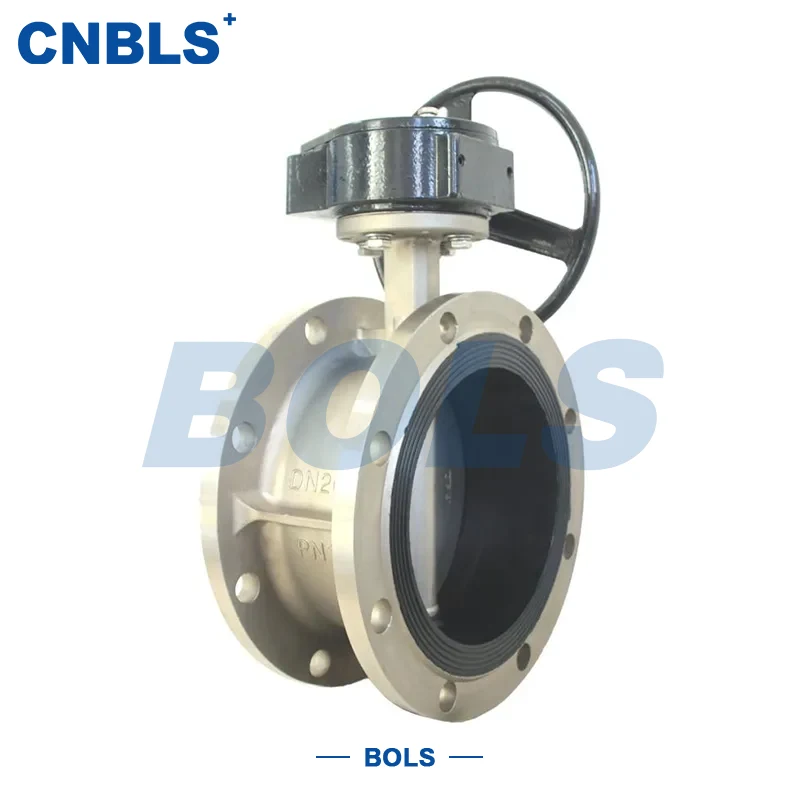
Table of Contents
- What Are High Performance Ventilation Butterfly Valves?
- Why Does Performance Matter in Industrial Ventilation Systems?
- What Are the Key Design Features?
- What Technical Parameters Should Buyers Consider?
- Pneumatic vs. Electric: Which Actuator Is Better?
- Where Are These Valves Commonly Used?
- How Should You Select the Right Valve?
- How Can You Maintain Long-Term Valve Performance?
- FAQ
What Are High Performance Ventilation Butterfly Valves?
High Performance Ventilation Butterfly Valves are specialized flow-control devices designed for industrial ventilation pipelines operating under relatively low pressure but often requiring large airflow capacity. According to Bolaisi's product information, the valve series is designed for ventilation and dust-removal applications and is available in stainless steel configurations including SS304, SS316, SS304L, and SS316L.
The valve uses a concentric, or centerline, butterfly structure. A circular disc rotates around the stem axis to open, close, or regulate airflow. This relatively simple construction reduces the number of moving components while creating a smooth flow path with comparatively low resistance.
Bolaisi offers two primary actuation configurations:
- D641W: Pneumatic ventilation butterfly valve operated by an air actuator.
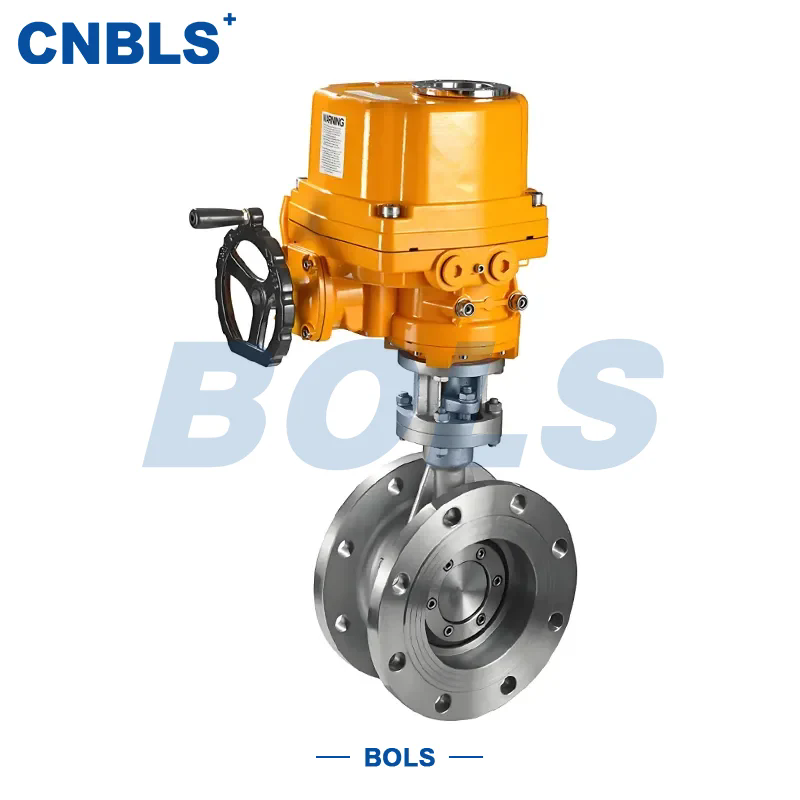
- D941W: Electric ventilation butterfly valve operated by an electric actuator.
The product range covers nominal diameters from DN100 to DN2000, making it suitable for applications where conventional small-diameter valves cannot provide sufficient airflow capacity.
Why Does Performance Matter in Industrial Ventilation Systems?
Industrial ventilation systems frequently handle dusty air, corrosive gases, high-temperature flue gas, or large volumes of air. A valve that creates excessive resistance or cannot withstand the operating environment may negatively affect the efficiency and reliability of the entire system.
A properly selected ventilation butterfly valve can help provide:
- Reliable airflow shut-off and regulation.
- Lower pressure loss across large ventilation pipelines.
- Stable operation in dust-laden or corrosive environments.
- Convenient integration with centralized automation systems.
- Reduced maintenance requirements through a relatively simple structure.
For procurement teams, valve performance should therefore be evaluated according to the complete operating environment rather than diameter alone. Media composition, temperature, pressure, leakage requirements, actuator type, and installation standards all influence the appropriate configuration.
What Are the Key Design Features?
Concentric Butterfly Structure
The centerline design positions the disc and stem around the same central axis. Its straightforward mechanical arrangement supports smooth rotation, relatively low operating torque, and efficient airflow passage. These characteristics are particularly useful in large-diameter, high-flow ventilation systems.
Stainless Steel Construction
Depending on the application, the body, disc, stem, and other pressure-bearing components can be configured with corrosion-resistant stainless steel materials. Options include CF8, CF8M, CF3, CF3M, A182 F304, F316, F304L, and F316L.
This material flexibility allows buyers to match valve construction with different levels of gas corrosiveness and temperature exposure.
Ventilation-Duty Sealing
The W-type ventilation sealing design can use metal sealing or a composite FKM and stainless-steel sealing configuration. The selection should be based on temperature, medium characteristics, expected wear, and the required leakage performance.
Flanged Connections
Flanged ends simplify pipeline installation, positioning, inspection, and replacement. The product information identifies GB/T 9113 and ANSI B16.5 among the commonly applicable flange standards.
What Technical Parameters Should Buyers Consider?
Technical specifications are especially important when purchasing valves for large industrial ventilation projects. The following table summarizes key specifications associated with the Bolaisi series.
| Parameter | Specification | Why It Matters |
|---|---|---|
| Nominal Diameter | DN100–DN2000 | Supports large airflow pipelines |
| Pressure Rating | PN 0.1 / 0.25 / 0.6 / 1.0 MPa; Class 15 | Must match system design pressure |
| Structure | Concentric / centerline | Provides a simple, low-resistance flow design |
| Connection | Flanged | Facilitates pipeline installation and maintenance |
| Temperature | -30°C to 400°C | Determines suitability for different operating environments |
| Applicable Media | Air, flue gas, dust-laden gas, corrosive gases | Helps determine material and sealing requirements |
| Leakage Standard | Ventilation grade, JB/T 8692 | Provides a reference for ventilation-service leakage performance |
These specifications should be treated as a starting point. Final selection should always be based on the actual project conditions and the manufacturer's confirmed technical documentation.
Pneumatic vs. Electric: Which Actuator Is Better?
Choosing between pneumatic and electric actuation depends largely on the site's available utilities, control philosophy, response requirements, and automation architecture.
| Feature | D641W Pneumatic | D941W Electric |
|---|---|---|
| Actuation | Pneumatic actuator | Electric actuator |
| Control | Solenoid valve / positioner | On-off or modulating |
| Operating Speed | 0.5–5 seconds | 5–30 seconds |
| Control Accuracy | Up to ±2% with positioner | Up to ±1% with modulating type |
| Power Source | Compressed air, 0.4–0.6 MPa | AC220V / AC380V |
| Typical Application | High-frequency operation and harsh environments | Remote control and precise adjustment |
Pneumatic actuation can be advantageous where rapid cycling and an existing compressed-air infrastructure are priorities. Electric actuation can be more convenient where remote operation, modulating control, or direct integration with an electrical control system is required.
Where Are These Valves Commonly Used?
The broad diameter range, stainless steel material options, and ventilation-oriented sealing design allow these valves to serve multiple industrial applications.
- Metallurgy: High-temperature flue-gas ventilation and exhaust control.
- Power generation: Boiler ventilation and desulfurization systems.
- Chemical processing: Dust collection and corrosive-gas exhaust systems.
- Building materials: Industrial dust-removal and ventilation equipment.
- Mining: Mine ventilation and environmental-control systems.
- Environmental protection: Industrial exhaust and air-treatment systems.
- Large facilities: Industrial plants and large-scale air-handling systems.
In these environments, the valve can be used for airflow shut-off, flow regulation, and ventilation-system flow control.
How Should You Select the Right Valve?
Industrial valve procurement should begin with a clear understanding of the actual operating conditions. Before selecting a High Performance Ventilation Butterfly Valves configuration, buyers should evaluate the following factors:
- Pipeline diameter: Confirm the required nominal diameter and connection dimensions.
- Operating pressure: Select a pressure rating appropriate for the ventilation system.
- Operating temperature: Verify that the body, disc, stem, and sealing materials are suitable for the maximum temperature.
- Gas composition: Identify corrosive components such as sulfur- or chlorine-containing gases.
- Dust concentration: Consider whether dust accumulation may affect the disc or sealing surfaces.
- Control requirements: Decide whether manual, pneumatic, electric, on-off, or modulating operation is required.
- Flange standard: Ensure compatibility with the existing pipeline flange system.
- Maintenance environment: Consider accessibility for inspection, cleaning, actuator servicing, and seal replacement.
For projects involving aggressive media or high-temperature flue gas, selecting the correct stainless steel grade and sealing configuration is particularly important.
How Can You Maintain Long-Term Valve Performance?
Even a well-designed industrial valve requires appropriate inspection and maintenance. Proper maintenance can reduce the risk of sticking, leakage, actuator malfunction, and unexpected downtime.
- Clean accumulated dust from sealing surfaces regularly.
- Inspect the disc and stem for abnormal wear or corrosion.
- Check actuator operation and mounting connections periodically.
- For pneumatic models, maintain stable compressed-air pressure between the recommended operating limits.
- Inspect electrical connections and actuator lubrication on electric configurations.
- During high-temperature startup, use gradual heating where required by the system design.
- Monitor leakage and operating torque to identify developing problems early.
A preventive maintenance schedule should be established according to operating frequency, gas composition, temperature, dust loading, and the manufacturer's technical recommendations.
FAQ
What are High Performance Ventilation Butterfly Valves mainly used for?
They are primarily designed for low-pressure, large-diameter ventilation applications, including dust removal, industrial exhaust, airflow shut-off, flow regulation, and flue-gas systems.
What sizes are available?
The referenced Bolaisi product range covers nominal diameters from DN100 to DN2000, making it suitable for both medium and very large ventilation pipelines.
Are these valves suitable for corrosive gases?
Yes. Stainless steel material options such as CF8M, CF3M, F316, and F316L can provide enhanced corrosion resistance. The appropriate grade should be selected according to the actual gas composition and operating conditions.
What is the difference between D641W and D941W?
D641W uses a pneumatic actuator, while D941W uses an electric actuator. Pneumatic actuation is suitable for rapid or frequent operation, whereas electric actuation is useful for remote and modulating control applications.
Can these valves handle high-temperature ventilation?
The referenced technical range is -30°C to 400°C. However, the actual allowable operating temperature depends on the selected material, sealing configuration, medium, and project conditions.
How should I choose between metal and composite sealing?
The choice should consider operating temperature, gas composition, leakage requirements, wear conditions, and service life expectations. For specific projects, buyers should confirm the sealing configuration with the valve manufacturer before ordering.
Conclusion
High Performance Ventilation Butterfly Valves provide a practical solution for industrial systems requiring large airflow capacity, low resistance, reliable shut-off, and automated operation. With concentric construction, stainless steel material options, ventilation-duty sealing, flanged connections, and pneumatic or electric actuation, they can be configured for demanding applications across metallurgy, power generation, chemical processing, mining, building materials, and environmental protection. If you are sourcing reliable industrial ventilation valves from a China manufacturer or supplier, carefully match the valve specifications with your system conditions. For customized configurations, technical consultation, or procurement support, contact us to discuss your project requirements with Bolaisi and find the right ventilation butterfly valve solution.
Related News
- What Makes Ball Valves Essential for Water Treatment and Desalination Plants?
- Basic Knowledge of Industrial Valves
- How Does the Ball Valve Achieve Zero Leakage with Soft Seat Sealing Materials?
- What Makes Ball Valves the Preferred Choice for High-Pressure and High-Temperature Services?
- How does Ball Valve maintain tight sealing under high-temperature conditions?
- Why Is a Two Piece High Platform Flanged Ball Valve a Smart Choice for Modern Industrial Pipeline Control
Leave me a message