
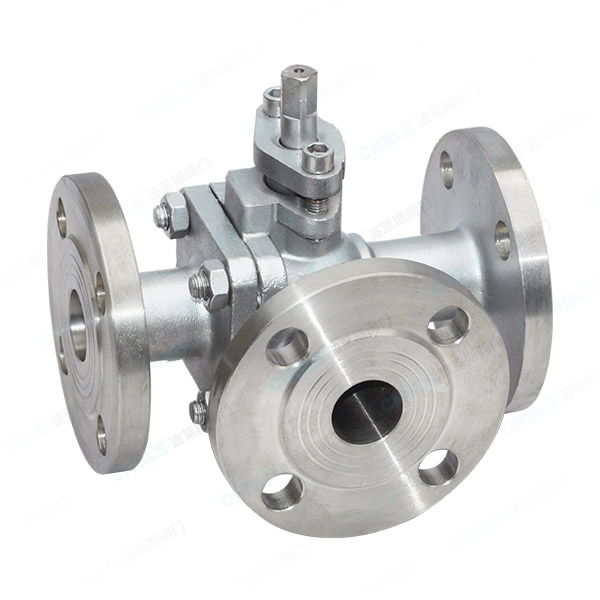
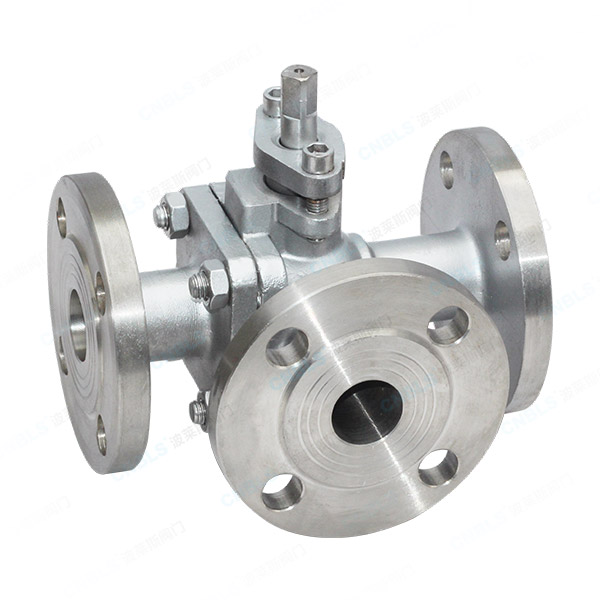
Stainless Steel T-shaped Three-way Ball Valves
With advanced manufacturing technology and strict quality control, Bolaisi Valve delivers high-performance Stainless Steel T-shaped Three-way Ball Valvess. The valve’s integral casting structure enables flexible media diversion. As a professional manufacturer, we offer customized and wholesale solutions, perfectly catering to buyers in petrochemical, water treatment and other industries.
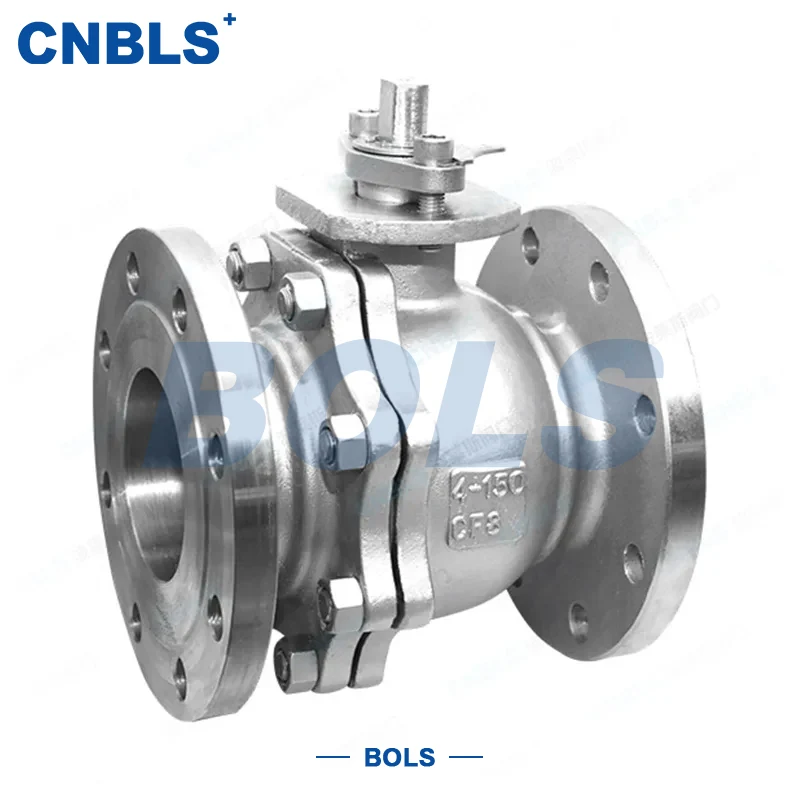
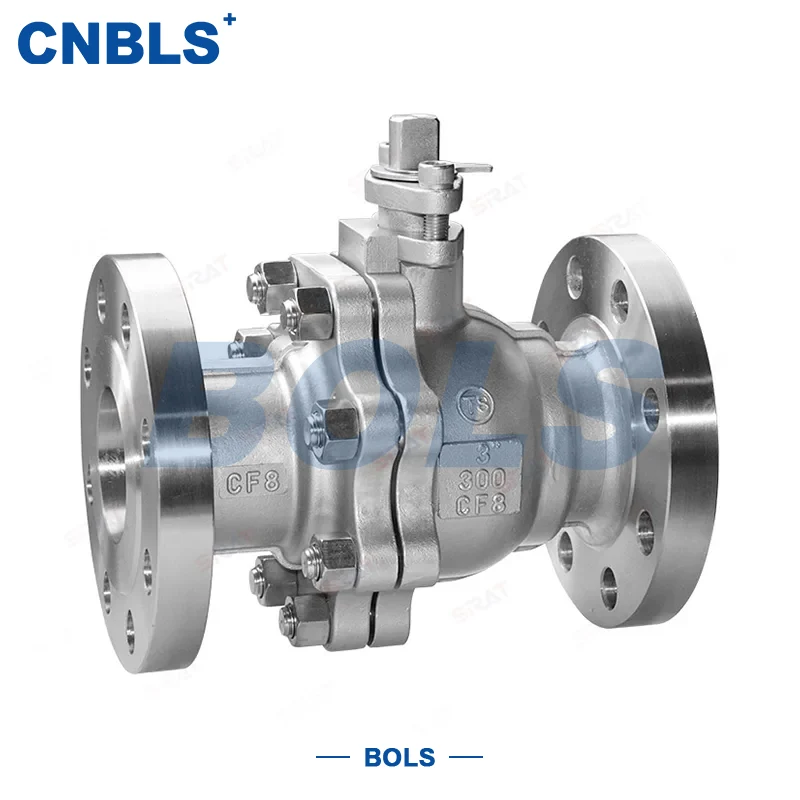
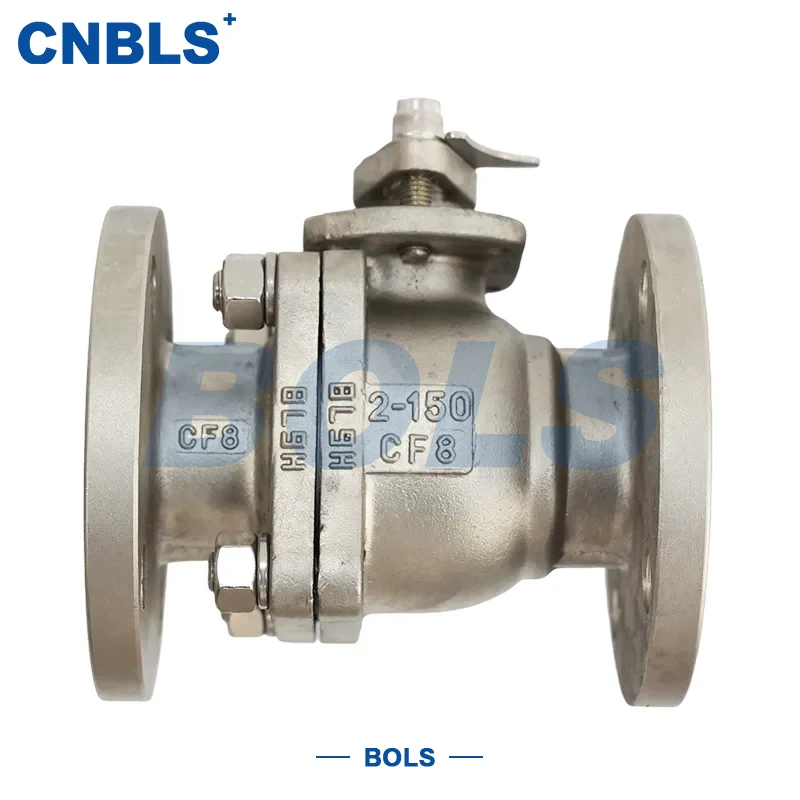
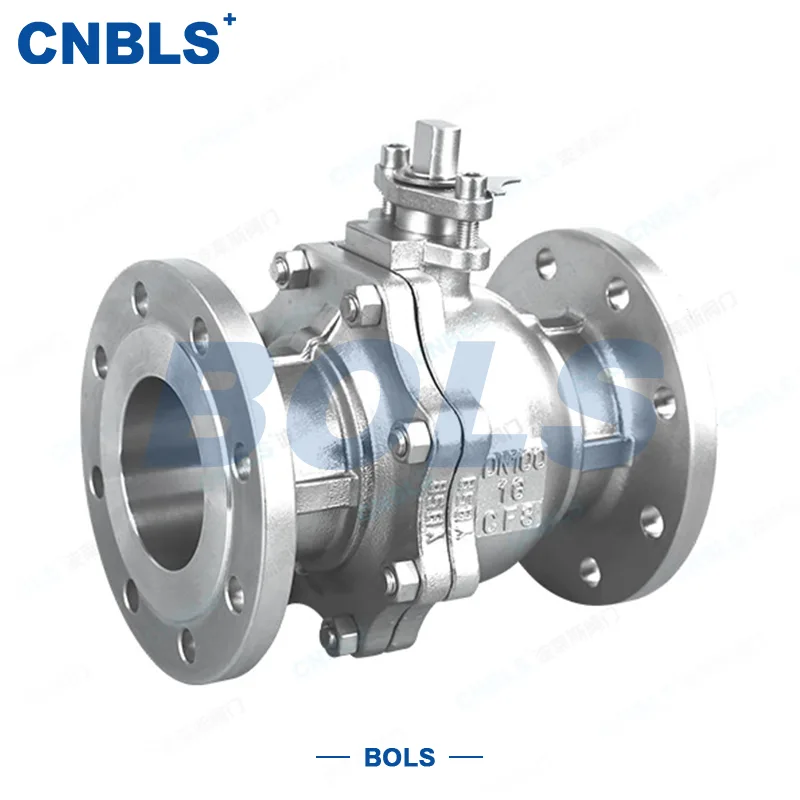
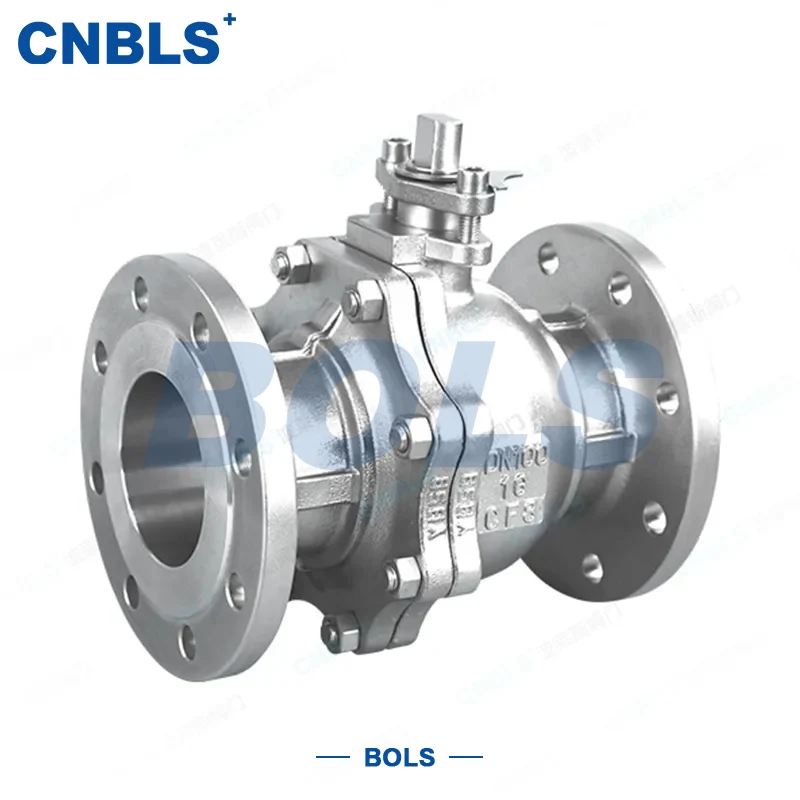
The Stainless Steel Q44F(T) Three-Way Ball Valve is a three-way ball valve made of stainless steel (304/316, etc.) and manufactured in compliance with Q44F(T) series standards. Its core feature lies in the ball and stem being integrally cast as a single unit, with T-type or L-type flow channels (F-type for straight-through flow, T-type for three-way flow). It enables media confluence, diversion or direction switching functions.
The Stainless Steel T-shaped Three-way Ball Valves integrates the ball and stem as a single cast unit. With T-type or L-type flow channels (F-type for straight-through, T-type for three-way), it allows confluence, diversion or switching of media. The valve features a compact structure, smooth flow channel, excellent sealing performance, and strong corrosion resistance.
With its compact structure, low flow resistance, superior sealing and high corrosion resistance, this valve is widely used in industrial fields such as petroleum, chemical engineering, water treatment, food, pharmaceuticals and electric power. It is particularly suitable for working conditions with high requirements for material corrosion resistance and fluid direction switching.
Product Features
1.One-Piece Cast Structure
The valve body and stem are integrally cast, enhancing structural strength and ensuring stable operation under long-term high-pressure and high-temperature conditions.
2.Multifunctional Flow Channel Design
The T-type three-way flow channel enables media confluence, diversion or direction switching, while the F-type straight-through flow channel is suitable for linear switching with low flow resistance, ensuring efficient and unobstructed system flow.
3.Excellent Sealing Performance
Optional soft seal (PTFE/RPTFE) or hard seal (metal seal) can be selected based on working condition temperature and media characteristics, providing reliable sealing, wear resistance and strong anti-leakage capability.
4.Multiple Drive Modes
Supports manual, worm gear, pneumatic (single-acting/double-acting) and electric (on-off/regulating) operation modes, adaptable to different installation spaces and automatic control requirements.
5.High Temperature, High Pressure and Corrosion Resistance
The stainless steel material can withstand a temperature range of -46°C~425°C and resist highly corrosive media, ensuring stable long-cycle operation.
6.Flexible Installation
Available with flange, threaded or butt-welded connections, complying with different pipeline standards (GB/ANSI) for easy maintenance and replacement.
Applications
The Stainless Steel T-shaped Three-way Ball Valves is widely used in the following scenarios:
● Direction switching, diversion and confluence systems of petroleum and natural gas pipelines
● Transportation of acid, alkali and salt media in chemical production
● Pipeline direction switching and diversion in water treatment projects
● Conveyance of clean media in food and pharmaceutical production
● Steam and oil product direction switching pipelines in the electric power industry
● Transportation systems for media containing a small amount of particles or highly corrosive media
Core Technical Parameters
|
Parameter Item |
Parameter Value |
|
Nominal Diameter |
DN 15mm - DN 200mm (NPS 1/2" - NPS 8") |
|
Pressure Class |
PN 10/16/25/40 MPa, Class 150/300 |
|
End Connection |
Flange ( RF), Threaded (NPT), Butt Welded (BW) |
|
Operation Mode |
Manual (handwheel), Worm Gear, Pneumatic (single-acting/double-acting), Electric (on-off/regulating) |
|
Temperature Range |
Soft-seal F-type: -29°C ~ 150°C; Hard-seal T-type: -46°C ~200 /425°C |
|
Leakage Class |
Soft-seal F-type: Class VI (API 6D); Hard-seal T-type: Class V |
|
Cv Value |
5 ~ 800 (varies with nominal diameter and flow channel type) |
|
Flow Channel Type |
F-type (straight-through), T-type (three-way) |
|
Executive Standard |
GB/T 9112 HG/T20592 |
|
Applicable Media |
Water, steam, oil products, natural gas, food-grade/pharmaceutical-grade media, corrosive chemicals |
Selection Points
1.Matching Media Characteristics with Flow Channels
Select stainless steel materials (CF8/CF8M/CF3/CF3M) based on media corrosivity and cleanliness; choose F-type or T-type flow channels according to functional requirements to achieve straight-through or three-way direction switching.
2.Seal Type Selection
Choose soft-seal F-type for normal temperature and low-pressure conditions, which balances wear resistance and sealing performance; opt for hard-seal T-type for high-temperature, high-pressure or particle-containing media to ensure wear resistance and long service life.
3.Pressure and Temperature Matching
Select PN/Class ratings matching the pipeline design pressure, with a 10%–20% margin reserved; temperature must match the seal type and stainless steel material to prevent performance degradation caused by overheating.
4.Nominal Diameter and Flow Matching
Select the appropriate DN value based on the calculated maximum flow rate and allowable pressure loss. The Stainless Steel T-shaped Three-way Ball Valves features smooth flow channels with better Cv values than conventional valves, and precise calculation is required for low-flow scenarios.
5.Drive Mode and Installation Space Matching
Choose manual or small pneumatic drives for confined spaces; select pneumatic/electric drives for large-flow or remote control applications; ensure the flange standard matches the stainless steel valve body.
Operation & Maintenance Notes
Operation Notes
1.Before initial use, confirm that the model, pressure class, nominal diameter match the working conditions, and check that the stainless steel valve body and flange connections are free of damage.
2.Operate slowly when opening, closing or switching directions to prevent water hammer from damaging the valve body or pipelines; apply force evenly during manual operation, and do not forcefully twist the valve.
3.For pneumatic/electric valves, confirm stable air supply/power supply before operation, and observe smooth movement, accurate direction switching and no abnormal noise.
4.When restarting after long-term shutdown, first drain condensate and impurities, then open the valve slowly.
5.It is strictly forbidden to operate under overpressure or overtemperature conditions; shut down immediately for troubleshooting in case of abnormalities.
Maintenance Notes
1.Inspect the sealing surface, stuffing box and valve body surface weekly to ensure no leakage, corrosion or cracks.
2.Replace the valve seat promptly when soft-seal F-type valves leak; regularly check wear on hard-seal T-type valves, and lap or replace parts when necessary.
3.Lubricate manual/worm gear drives quarterly; drain water and check oil level of pneumatic valves regularly.
4.For corrosive media working conditions, inspect the valve body and ball regularly; drain media and protect against moisture and dust during long-term storage.
5.Troubleshooting: In case of jamming, relieve pressure first, then disassemble and clean impurities or replace parts; for pneumatic/electric malfunctions, switch to manual operation for emergency use, then troubleshoot the actuator.
6.Establish a maintenance file, recording the model, installation date, maintenance and replacement parts to provide a basis for subsequent maintenance.
Related Category
Send Inquiry
Contact Info
-
Address
638 Binhai 9th Road, Longwan District, Wenzhou City, Zhejiang Province, China
-
Tel
-
Email
For inquiries about our products or pricelist, please leave your email to us and we will be in touch within 24 hours.
News Recommendations