
What Makes Ball Valves the Preferred Choice for High-Pressure and High-Temperature Services?
In the demanding environments of oil refining, chemical processing, and power generation, valves must perform reliably under conditions that would rapidly degrade conventional equipment. Pressures exceeding 100 bar and temperatures surpassing 500°C are routine in these industries. Among the various valve types available, the Ball Valve has emerged as the preferred solution for many of these high-pressure and high-temperature applications. Its simple quarter-turn operation, bubble-tight sealing capability, and compact design provide distinct advantages over traditional gate, globe, and plug valves in severe service conditions.
This article provides a systematic technical analysis of the Ball Valve, examining the design features, material selections, and engineering principles that make it suitable for high-pressure and high-temperature services. The analysis covers seat materials and sealing mechanisms, body construction and pressure containment, thermal management strategies, and the testing standards that validate performance. The discussion is grounded in practical engineering considerations and includes detailed specifications, comparative tables, and selection criteria to assist engineers and procurement professionals in making informed decisions.
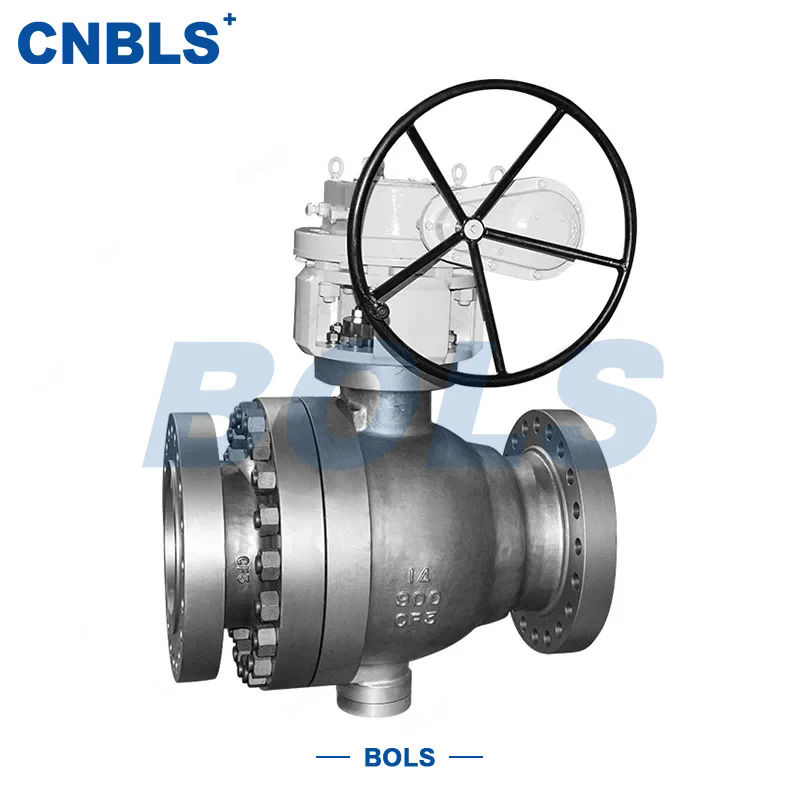
Table of Contents
- 1. Ball Valve Design Principles and Operating Characteristics
- 2. Seat Materials and Sealing Mechanisms for High-Temperature Service
- 3. Pressure Containment and Body Construction
- 4. Thermal Management and Expansion Compensation
- 5. Testing Standards and Qualification Requirements
- 6. Selection Criteria and Application-Specific Considerations
- 7. Frequently Asked Questions (FAQ)
- 8. Conclusion
1. Ball Valve Design Principles and Operating Characteristics
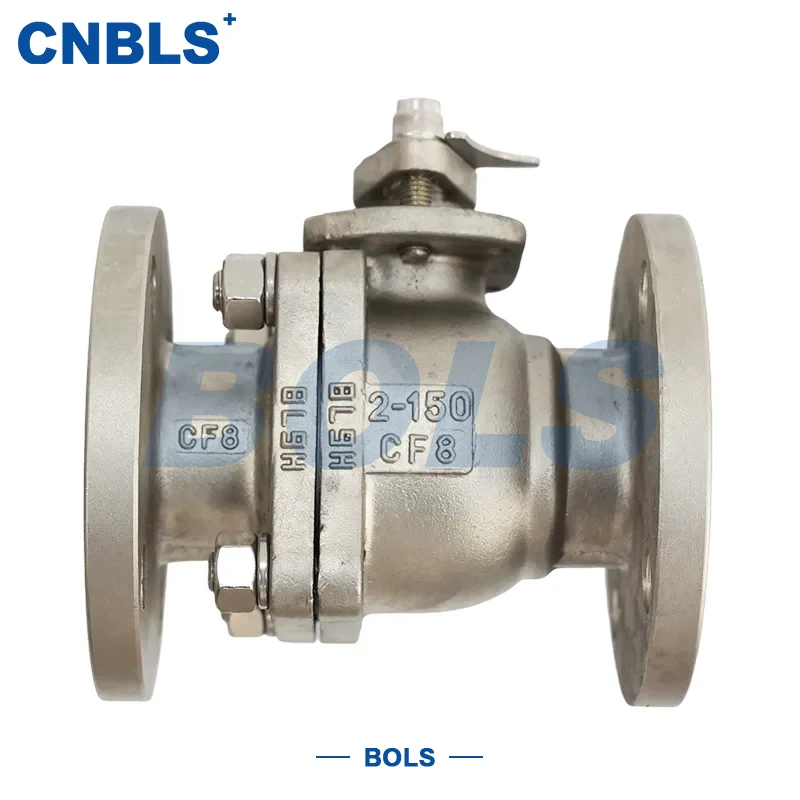
The Ball Valve is a quarter-turn valve that uses a spherical ball with a cylindrical bore to control the flow of fluid. The operating principle is simple and robust: rotating the ball 90 degrees aligns the bore with the flow path, allowing flow (open position), or positions the bore perpendicular to the flow path, blocking flow (closed position). The sealing is achieved by pressing the ball against two annular seats, located on the upstream and downstream sides of the valve. The sealing force is provided by the pressure of the fluid itself (upstream pressure pressing the ball against the downstream seat) and, in many designs, by spring-loaded seats that provide preload.
The Ball Valve offers several inherent advantages for high-pressure and high-temperature services:
- Bubble-tight sealing: The spherical geometry of the ball provides a full-circumference sealing surface that ensures bubble-tight shutoff, even at high pressures.
- Quarter-turn operation: The 90-degree rotation provides fast operation, essential for emergency shutdown or quick isolation.
- Low torque: When the valve is in the fully open or fully closed position, the sealing force is primarily provided by the pressure differential.
- Compact design: The Ball Valve requires significantly less space than other valve types, reducing installation footprint.
The characteristic design of a Ball Valve includes the ball, the seats, the stem, and the body. The ball is typically made from stainless steel and is either polished or hard-faced. The seats can be made from a range of materials, including polymers (PTFE, PEEK) for lower temperatures and metal alloys (Stellite, Inconel) for high-temperature applications. The stem is the connection between the actuator and the ball, and it must be designed to provide a seal against the process fluid while allowing the ball to rotate smoothly.
At Zhejiang Bolaisi Valve Co., Ltd., our Ball Valve products are engineered to meet the demanding requirements of high-pressure and high-temperature services. Our design methodology incorporates a combination of standardized components, precision machining, and rigorous inspection procedures to ensure consistent quality and performance. The Ball Valve designs we offer include both floating ball and trunnion-mounted configurations, each selected based on the specific application requirements. The following sections provide a detailed technical analysis of the key aspects of Ball Valve design for high-pressure and high-temperature service.
2. Seat Materials and Sealing Mechanisms for High-Temperature Service
The selection of seat materials is the single most critical decision in the design of a Ball Valve for high-temperature service. The seat is the primary sealing element, and it must maintain its integrity and provide a reliable seal at the operating temperature. At temperatures above 200°C, most polymer materials become unsuitable, necessitating the use of metal-seated Ball Valves or polymer-metal composite seats. Metal-seated Ball Valves use a metal-to-metal seal, typically with a hard-facing on the ball and seat surfaces. The hard-facing materials are selected for their wear and corrosion resistance, as well as their ability to form a tight seal.
The key materials used for Ball Valve seats in high-temperature services are shown in the following table.
| Material | Type | Maximum Continuous Operating Temperature (°C) | Key Properties | Typical Applications |
| PTFE | Polymer | 200 | Excellent chemical resistance, low friction, bubble-tight seal | General-purpose, chemical processing |
| Reinforced PTFE | Composite | 260 | Improved creep resistance and durability | Higher-temperature chemical applications |
| PEEK | Polymer | 250 | High mechanical strength, low creep, excellent chemical resistance | High-pressure, high-temperature chemical processing |
| Stainless Steel 304 | Metal | 500 | General-purpose metal seating, good corrosion resistance | Steam, high-temperature water |
| Stainless Steel 316 | Metal | 500 | Improved corrosion resistance, particularly against chlorides | Chemical processing, marine applications |
| Stellite | Metal Alloy | 800 | Excellent wear resistance, galling resistance, and high-temperature strength | Severe service, abrasive media, high temperature |
| Inconel | Metal Alloy | 800 | Excellent high-temperature strength and corrosion resistance | Extreme temperature, corrosive media |
The sealing mechanism in a metal-seated Ball Valve is different from that in a soft-seated valve. The seal relies on the deformation of the metal surfaces under pressure, with the ball and seat lapped to a very smooth finish. The sealing force is typically higher in a metal-seated valve, requiring a more robust actuator. The leakage rate may also be higher than a soft-seated valve, but a metal-seated valve can provide a seal that meets the requirements of most industrial applications, including the tight shutoff requirements of Class VI (bubble-tight) for soft-seated valves and the much more stringent Class V for metal-seated valves.
In some high-temperature applications, a seat design using a combination of a metal seat ring and a polymeric or graphite seal is used. This design is known as a "fire-safe" or "soft/metal" seat. The metal ring provides the primary seal, while the soft seal provides the bubble-tight seal at lower temperatures. At higher temperatures, the soft seal may degrade, but the metal ring will continue to provide a seal, preventing leakage. At Zhejiang Bolaisi Valve Co., Ltd., our Ball Valve products are available with a range of seat materials and designs, allowing customers to select the optimal configuration for their specific temperature and pressure requirements.
3. Pressure Containment and Body Construction
The body of a Ball Valve must be designed to contain the process fluid at the required pressure and temperature. For high-pressure applications, the body must be strong enough to withstand the internal pressure without permanent deformation or leakage. The design of the body must also consider the forces generated by the pressure, such as the expansion of the ball and seats, and the forces acting on the stem. The body is typically constructed from cast or forged steel, with the specific material chosen based on the temperature, pressure, and corrosivity of the process fluid. The body design must also provide access for assembly, maintenance, and inspection.
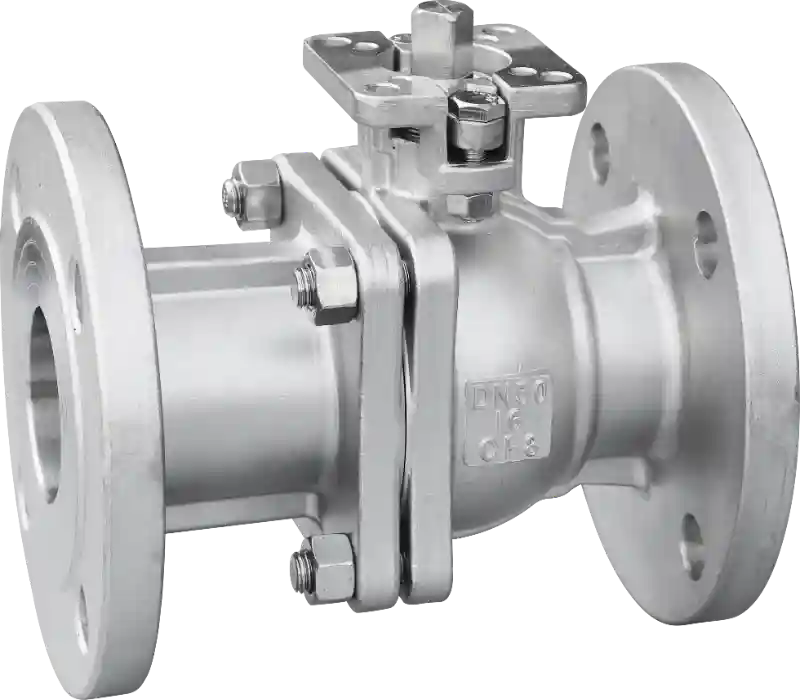
The two most common body configurations for Ball Valves are the split body and the one-piece (monobloc) body. The split body, as the name suggests, is divided into two or more parts that are bolted together. This design allows for easy access to the internal components for maintenance and repair. The split body is also more flexible in terms of material selection and manufacturing. The one-piece body is a single, integral casting or forging. It provides a more robust pressure-containing envelope and eliminates the bolted joints that are potential leak paths. However, the one-piece body is more complex to manufacture and is typically more expensive.
For high-pressure and high-temperature applications, the body design must be carefully engineered to manage the thermal stresses that result from the temperature differential between the process fluid and the ambient environment. The body must be designed to allow for thermal expansion without causing distortion of the internal components or creating excessive stress on the bolted joints. The design must also provide adequate support for the ball and the seats.
The following table compares the two common body designs for Ball Valve in high-pressure and high-temperature services.
| Feature | Split Body | One-Piece Body |
| Pressure Containing Envelope | Bodies bolted together | Integral casting/forging |
| Leak Potential | Multiple potential leak paths (bolted joints) | Single, integral leak path |
| Ease of Maintenance | Good (accessible internal components) | Poor (limited access) |
| Manufacturing Cost | Lower | Higher |
| Typical Applications | General industrial, moderate temperature/pressure | High temperature, high pressure, critical service |
At Zhejiang Bolaisi Valve Co., Ltd., we manufacture Ball Valve with both split body and one-piece body designs, depending on the application requirements. For high-pressure and high-temperature services, our standard design uses a one-piece forged body, which provides the highest level of pressure integrity and thermal stability. The body is designed with ample wall thickness, reinforced flanges, and optional drain ports for maintenance and testing. The body geometry is optimized for high-temperature operation, with generous radii and smooth transitions to minimize stress concentrations.
4. Thermal Management and Expansion Compensation
In high-temperature service, the Ball Valve is subjected to significant thermal expansion. The ball, seats, and body all expand at different rates, potentially causing distortion, binding, or leakage. The design of the Ball Valve must incorporate features that compensate for this differential expansion. The most common methods of thermal compensation are the use of spring-loaded seats, the selection of materials with compatible thermal expansion coefficients, and the design of the ball and seat geometry to allow for relative movement.
Spring-loaded seats are one of the most effective methods of thermal compensation. A set of springs, typically located behind the seat, provides a preload that maintains the sealing force even as the components expand or contract. The springs are designed to operate over the full temperature range of the valve, maintaining a constant sealing force. The spring force must be sufficient to provide a seal at the operating pressure and temperature but not so high that it causes excessive friction or wear. The spring material is also critical; it must be resistant to high-temperature relaxation and corrosion.
Another approach is to use a seat design that incorporates a flexible element, such as a metal bellows or a corrugated diaphragm. This flexible element provides a seal while allowing the seat to move axially with the ball. The flexible element is typically made from a high-temperature alloy, such as Inconel or Hastelloy, and is designed to withstand the thermal and pressure cycling of the valve. The flexible seat design is more complex and expensive than a spring-loaded seat but offers superior sealing performance in demanding applications.
The thermal expansion of the ball itself must also be considered. The ball is typically constructed from the same material as the body, so its thermal expansion will match that of the body. However, the ball's geometry can affect the fit of the seats. A ball that is too tight in the bore can cause binding, while a ball that is too loose can cause leakage. The ball's diameter and the seat's bore diameter are carefully matched to provide the correct clearance at the operating temperature.
At Zhejiang Bolaisi Valve Co., Ltd., we use a combination of spring-loaded seats and material selection to manage thermal expansion in our Ball Valve products. The spring material is selected for high-temperature performance, and the spring preload is calculated to maintain the sealing force across the full temperature range. The ball and seat geometry are designed to allow for relative movement without creating stress concentrations.
5. Testing Standards and Qualification Requirements
Ball Valve intended for high-pressure and high-temperature services must undergo rigorous testing to verify their performance and ensure they meet the specified requirements. The tests are conducted in accordance with international standards, including API 6D (Specification for Pipeline Valves), API 607 (Fire Test for Soft-Seated Quarter-Turn Valves), and ISO 10497 (Fire Type-Testing Requirements). The tests are designed to verify the valve's pressure-holding capability, leakage rate, and operational performance under simulated service conditions.
The following table provides a summary of the key tests performed on Ball Valve for high-pressure and high-temperature service.
| Test | Standard | Description | Acceptance Criteria |
| Hydrostatic Shell Test | API 6D / ASME B16.34 | Valve body is pressurized with water to 1.5x the rated pressure | No visible leakage or pressure drop |
| Seat Leakage Test (Low-Pressure) | API 598 / ISO 5208 | Valve is tested for leakage at low pressure | No visible leakage for soft-seated valves; limited leakage for metal-seated |
| Seat Leakage Test (High-Pressure) | API 598 / ISO 5208 | Valve is tested for leakage at the rated pressure | As per the leakage class (e.g., Class VI for bubble-tight shutoff) |
| Fire Test | API 607 / ISO 10497 | Valve is exposed to a fire for a specified duration | Limited leakage after the fire test |
| Hydrostatic Stem Test | API 6D | Valve stem is tested for leakage under pressure | No leakage |
| Operational Cycling Test | Customer Specification | Valve is cycled multiple times (open-close) under pressure | No degradation of sealing performance |
| High-Temperature Pressure Test | Customer Specification | Valve is tested at the operating temperature and pressure | Seal integrity and operational performance |
The fire test is a particularly important test for Ball Valve in high-temperature services, as it simulates the behavior of the valve during a fire event. The valve is subjected to a fire of a specified duration and temperature, and the leakage is measured. The test ensures that the valve provides a seal even after the soft seats have been damaged by the fire, a requirement known as "fire-safe" design.
At Zhejiang Bolaisi Valve Co., Ltd., our Ball Valve products are designed to meet the requirements of API 6D, API 607, and ISO 10497. We perform the required tests on each valve type, and we maintain a comprehensive test report archive for our customers. Our Ball Valve products are also available with a full range of performance verification testing, including type testing and prototype testing, to verify that they meet the customer's specific requirements.
6. Selection Criteria and Application-Specific Considerations
Selecting the correct Ball Valve for a high-pressure and high-temperature application requires a systematic assessment of the operating conditions, the fluid characteristics, and the performance requirements. The selection process should consider the following factors:
- Fluid Temperature: The operating temperature determines the appropriate seat material and body material. At temperatures below 200°C, a soft-seated valve may be used. Above 200°C, a metal-seated valve is required. The maximum temperature should be considered, as well as the range and the frequency of temperature cycles.
- Fluid Pressure: The operating pressure determines the required pressure class and the body thickness. The pressure rating of the Ball Valve must be equal to or greater than the maximum operating pressure. The pressure should be considered in conjunction with the temperature, as the pressure rating of the valve typically decreases at higher temperatures.
- Fluid Chemical Compatibility: The fluid must be compatible with the valve's wetted materials, including the ball, seats, and body. Chemical compatibility data should be reviewed to ensure the materials will not corrode, degrade, or react with the process fluid.
- Leakage Rate Requirements: The allowable leakage rate of the valve is determined by the application. For bubble-tight shutoff, a soft-seated valve with a PTFE or PEEK seat is required. For applications where some leakage is acceptable, a metal-seated valve may be used.
- Actuator Requirements: The torque required to operate the Ball Valve depends on the size, the seat material, and the pressure. The actuator must be selected to provide the required torque, and the torque must be calculated at the operating temperature and pressure.
The following table provides a decision matrix for selecting the appropriate Ball Valve type based on the temperature and pressure conditions.
| Temperature Range | Pressure Range | Recommended Ball Valve Type | Key Considerations |
| < 200°C | < 100 bar | Soft-seated Ball Valve (PTFE, PEEK) | Bubble-tight sealing, low torque, cost-effective |
| < 200°C | > 100 bar | Soft-seated Ball Valve with reinforced seats | High-pressure capability, bubble-tight sealing |
| 200°C - 500°C | < 100 bar | Metal-seated Ball Valve (316SS, Stellite) | Fire-safe design, high-temperature capability, some leakage |
| 200°C - 500°C | > 100 bar | Metal-seated Ball Valve (Inconel, Stellite) | High-pressure and high-temperature capability, fire-safe design |
| > 500°C | Any | Specialty high-temperature Ball Valve | Custom design, advanced materials, rigorous testing |
At Zhejiang Bolaisi Valve Co., Ltd., our engineering team is available to assist with the selection of the appropriate Ball Valve for your specific application. We provide detailed technical data, material compatibility charts, and performance verification testing to ensure that the selected Ball Valve meets all requirements. Our Ball Valve products are designed and manufactured to the highest standards, ensuring reliable performance in the most demanding high-pressure and high-temperature applications.
7. Frequently Asked Questions (FAQ)
Question 1: What is the maximum temperature for a soft-seated ball valve?
Answer: The maximum continuous operating temperature for a soft-seated Ball Valve depends on the seat material. PTFE seats are typically rated to 200°C (392°F), while reinforced PTFE and PEEK seats can operate up to 260°C (500°F). Above 260°C, a metal-seated Ball Valve is required. The specific temperature limit should be verified with the manufacturer, as it may vary depending on the pressure and the specific seat design.
Question 2: What is the difference between a floating ball and a trunnion-mounted ball valve?
Answer: In a floating ball design, the ball is not fixed to the valve body; it is "floating" between the seats. The upstream pressure presses the ball against the downstream seat, creating the seal. This design is suitable for smaller valves and lower pressures. In a trunnion-mounted design, the ball is fixed to a shaft (the trunnion) that supports the ball and prevents it from moving downstream. This design reduces the operating torque and is suitable for larger valves and higher pressures. The selection depends on the size, pressure, and temperature requirements.
Question 3: Can a ball valve be used for flow control, or is it strictly for on/off service?
Answer: Ball valves are primarily designed for on/off (isolation) service. However, certain Ball Valve designs, such as V-notch Ball Valve, are specifically designed for flow control applications. These valves feature a ball with a V-shaped notch that provides a more linear flow characteristic. For throttling applications, a V-notch Ball Valve is a common choice.
Question 4: What is the required torque to operate a high-pressure ball valve?
Answer: The torque required to operate a Ball Valve depends on the size, the seat material, the pressure, and the temperature. The torque requirement is typically calculated by the valve manufacturer and is provided in the valve's technical data sheet. The torque generally increases with the pressure and the size of the valve. For high-pressure applications, a pneumatic or electric actuator is often required.
Question 5: What is the difference between a fire-safe and a non-fire-safe ball valve?
Answer: A fire-safe Ball Valve is designed to maintain a seal even when the soft seats are damaged by a fire. The fire-safe design typically includes a metal-to-metal seat that provides a backup seal in the event of a fire. The fire-safe valve is tested to API 607 or ISO 10497 to verify its performance. A non-fire-safe Ball Valve does not have this backup seal and may leak in a fire event. Fire-safe Ball Valve are required in many applications, including those in refineries and chemical plants.
8. Conclusion
Ball Valves have emerged as the preferred choice for high-pressure and high-temperature services due to their robust design, reliable sealing performance, and versatility. The selection of the appropriate Ball Valve for a given application requires a careful evaluation of the operating conditions, the fluid characteristics, and the performance requirements. The key design elements—the seat material, the body construction, the thermal compensation features, and the fire-safe design—all contribute to the valve's suitability for high-pressure and high-temperature service. By understanding these design elements and the associated technical considerations, engineers and procurement professionals can select Ball Valves that provide reliable and safe operation over the life of the equipment.
At Zhejiang Bolaisi Valve Co., Ltd., we are committed to providing high-quality Ball Valve products that meet the demanding requirements of high-pressure and high-temperature applications. Our Ball Valve are engineered with advanced materials, precision machining, and rigorous testing to ensure optimal performance and long service life. We offer a comprehensive range of Ball Valve configurations, including soft-seated and metal-seated designs, fire-safe and non-fire-safe options, and floating and trunnion-mounted designs.
Contact Zhejiang Bolaisi Valve Co., Ltd. for technical assistance in selecting the appropriate Ball Valve for your high-pressure and high-temperature application.
Related News
- What Factors Determine the Pressure Rating of Stainless Steel Ball Valves?
- What Makes Ball Valves Essential for Water Treatment and Desalination Plants?
- Basic Knowledge of Industrial Valves
- How Does the Ball Valve Achieve Zero Leakage with Soft Seat Sealing Materials?
- How does Ball Valve maintain tight sealing under high-temperature conditions?
- Why Is a Two Piece High Platform Flanged Ball Valve a Smart Choice for Modern Industrial Pipeline Control
Leave me a message