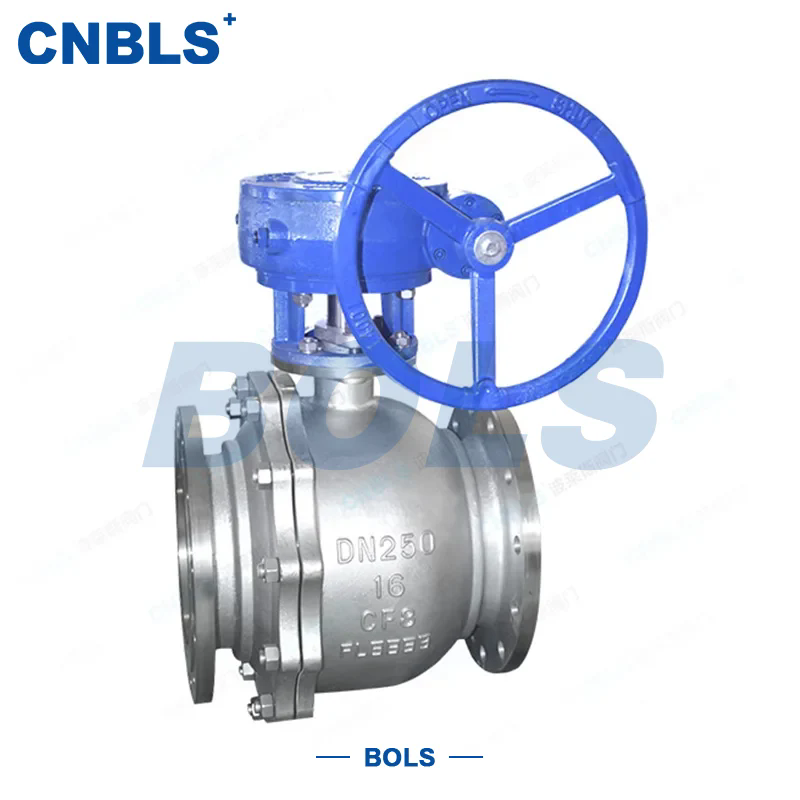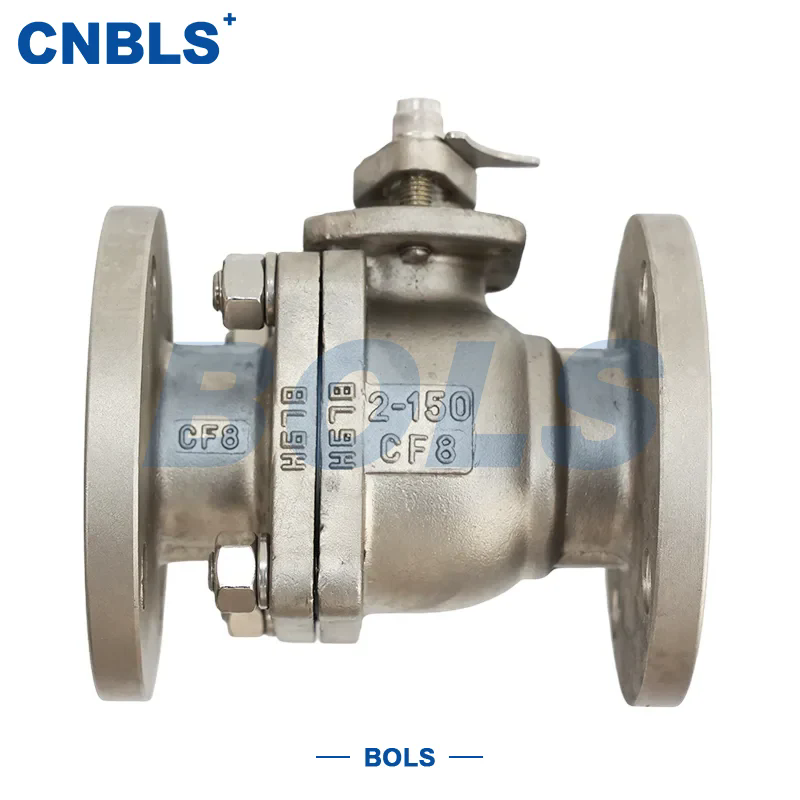
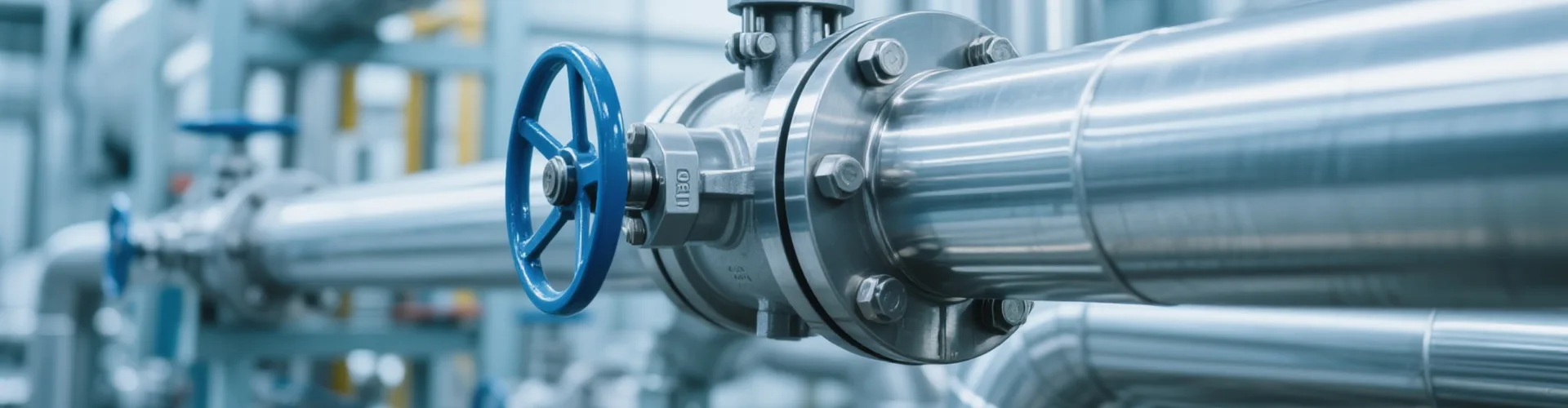
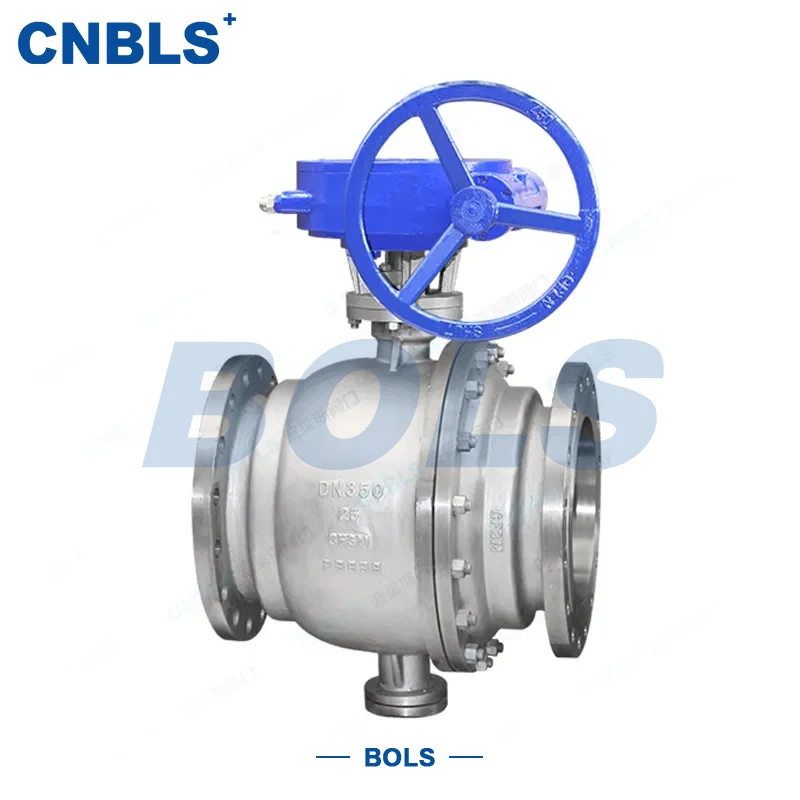
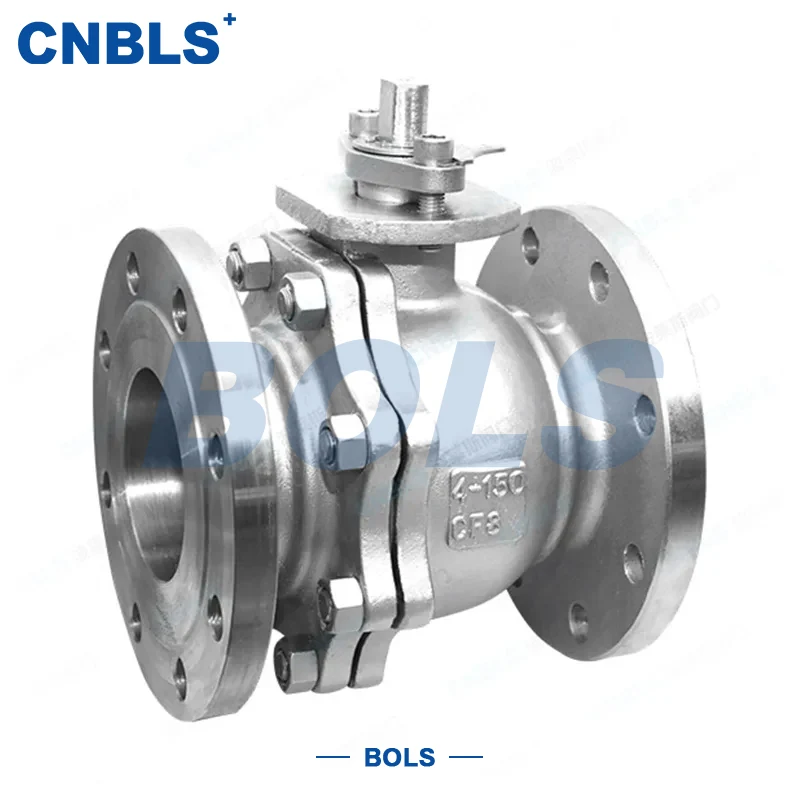
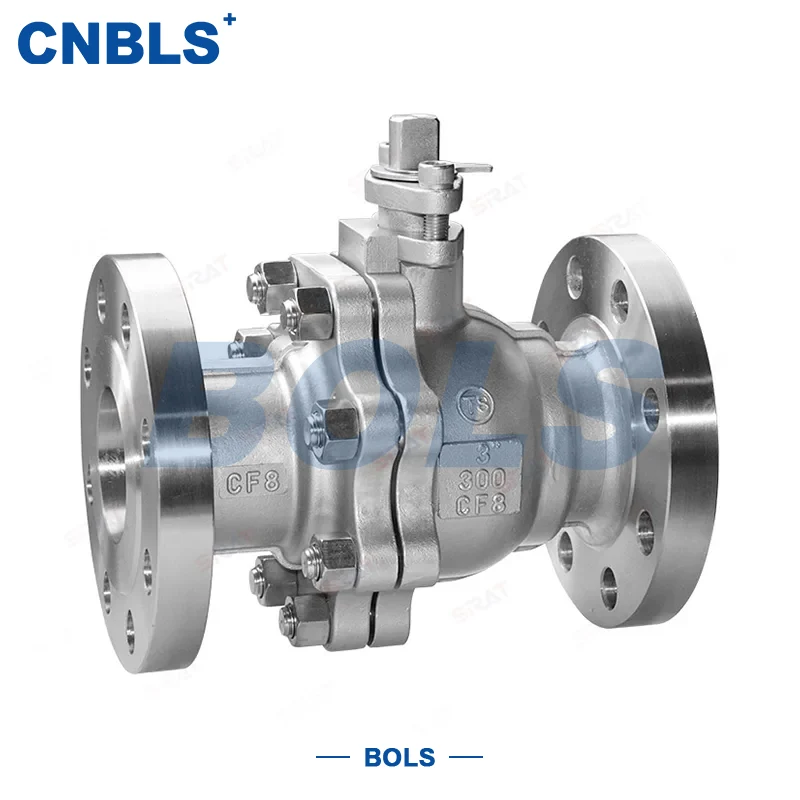
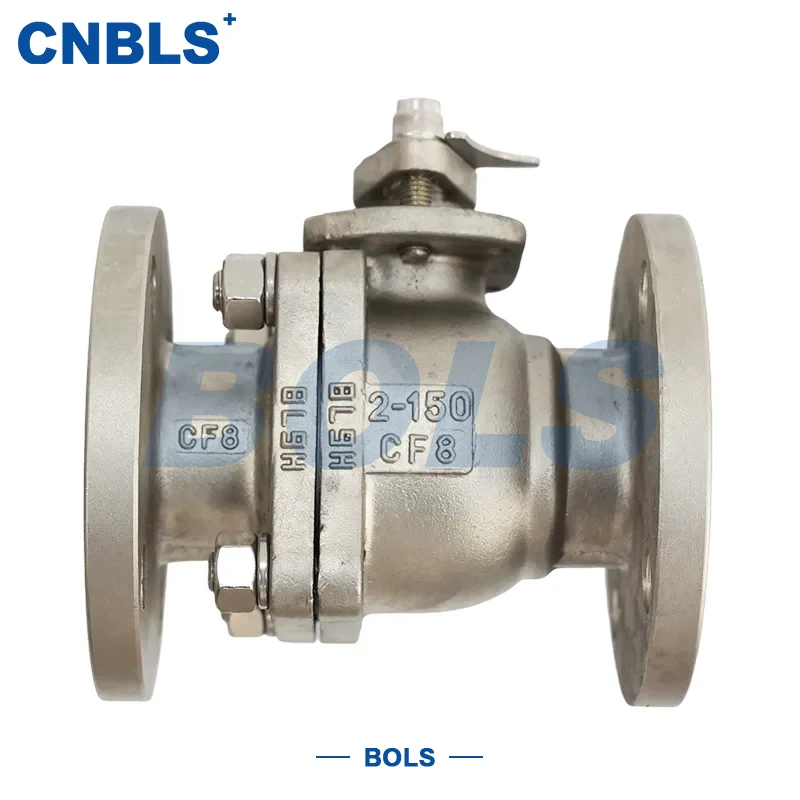
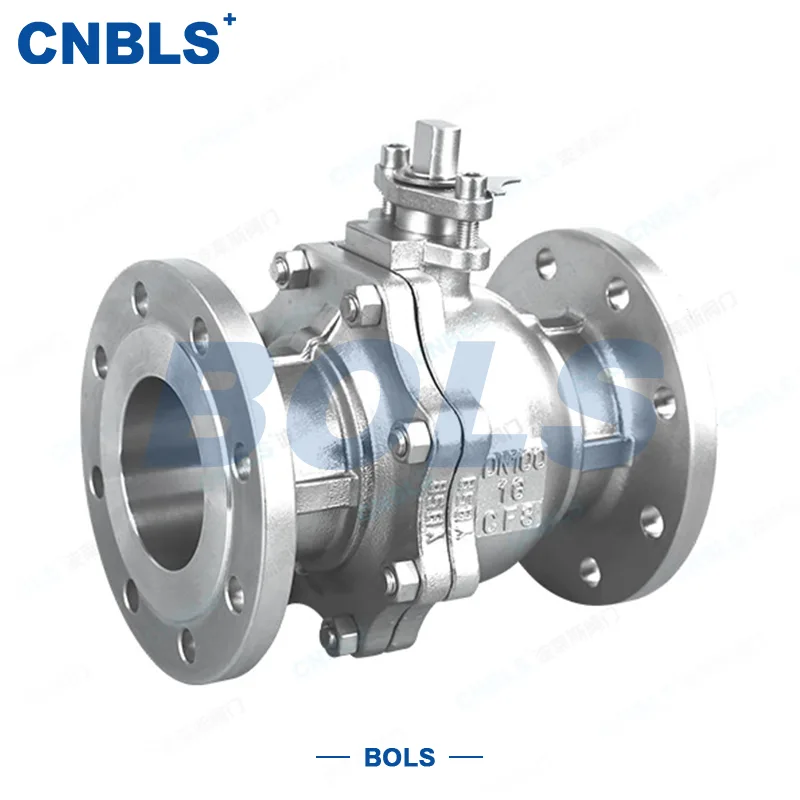
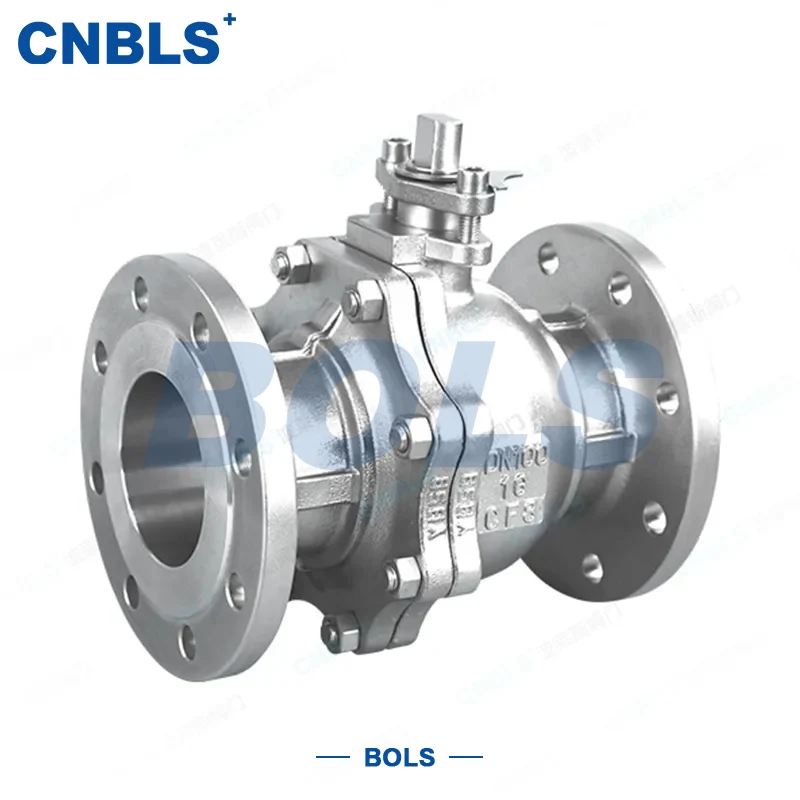
Stainless Steel Flange-connected Fixed Ball Valves
Bolaisi is a professional supplier with advanced production technology and strict quality control, providing high-quality industrial valves. The Stainless Steel Flange-connected Fixed Ball Valves are a high-precision shut-off valve with stable high-pressure sealing. We manufacture it to international standards, offering wholesale and customized services to meet diverse industrial needs.
The Stainless Steel Flange-Mounted Fixed Ball Valves is a high-precision rotary shut-off and control valve, featuring full stainless steel construction, flange connection, and a fixed ball structure. It is specifically engineered for high-pressure, large-diameter, and corrosive working conditions. Its core components include a stainless steel valve body/bonnet, a fixed support ball positioned by upper and lower valve stems, a valve seat with an elastic preloading mechanism, a valve stem, a packing seal assembly, and national/American standard flange connection ends, ensuring easy disassembly and firm connection with industrial pipelines.
The core advantage of this valve lies in the stability of its fixed ball structure: during operation, all loads generated by medium pressure acting on the ball are transmitted to the upper and lower bearings, resulting in no ball displacement. This ensures sealing reliability is not affected by fluctuations in medium pressure, making it more suitable for high-pressure and large-diameter scenarios compared to floating ball structures. The working principle is simple and efficient: the valve stem is driven by manual, pneumatic, or electric actuators to rotate the fixed ball 0°~90° — when the ball’s through-hole aligns with the pipeline flow channel, the valve is fully open, allowing unobstructed medium flow; when rotated 90° to completely misalign with the flow channel, it is fully closed to achieve tight shut-off; flow can be precisely adjusted at any angle between 0° and 90°.
Manufactured in strict compliance with domestic and international standards such as GB/T 12237 and API 608, the Stainless Steel Flange-Mounted Fixed Ball Valves boasts small opening and closing torque, reliable sealing, low flow resistance, and long service life. It is widely used in various industrial fields including petrochemicals and natural gas transmission, serving as a core pipeline equipment for efficient shut-off and precise regulation of media.
Key Features & Advantages
Focusing on the needs of harsh industrial working conditions, the Stainless Steel Flange-Mounted Fixed Ball Valves has prominent core features, suitable for various medium-high pressure and corrosive pipeline systems:
Stable High-Pressure Sealing with Fixed Ball Structure:
The ball is positioned by upper and lower valve stems, and all medium pressure loads are transmitted to the bearings, ensuring no ball displacement. Even under fluctuating high-pressure conditions, it maintains stable sealing to eliminate leakage risks, suitable for high-pressure (PN40 and above) and large-diameter (DN200 and above) scenarios.
Full Stainless Steel Construction for Corrosion, Wear and High-Temperature Resistance:
The main body is made of 304, 316, 316L and other stainless steel materials, offering excellent corrosion resistance, wear resistance, and high-temperature resistance. It can adapt to corrosive media such as weak acids, alkalis, sulfur-containing and chlorine-containing substances, balancing cleanliness and durability.
Flange Connection with Strong Adaptability:
Adopting various flange types including RF raised face, FM female face, and RJ ring joint face, it complies with GB/T 9113 and ASME B16.5 standards, perfectly matching domestic and international industrial pipelines. It is easy to disassemble and assemble, facilitating later maintenance and inspection.
Reliable Sealing with Ultra-Low Leakage Rate:
Soft seal meets Class VI sealing standard, suitable for low-pressure clean media; hard seal adopts Stellite hard alloy overlay welding, with leakage grade up to ISO 5208 Class A, suitable for high-temperature, high-pressure, and particle-containing media, meeting sealing requirements of different working conditions.
Easy Operation and Ultra-Low Flow Resistance:
With small opening and closing torque, it supports manual, pneumatic, and electric drive modes for flexible operation; the full-port design enables unobstructed medium flow, with flow resistance coefficient matching the diameter, reducing pipeline energy consumption.
Standardized Manufacturing with Strong Versatility:
Strictly following multiple domestic and international industry standards, it has a complete range of models and specifications, suitable for various domestic and international industrial projects, and can be installed and used without additional modifications.
Core Technical Specifications
Basic Specifications
|
Parameter Item |
Parameter Value |
|
Basic Model |
Q347F-16P/25P/40P/64P/100P, Q347H-16P/25P/40P/64P/100P |
|
Nominal Diameter |
DN15~DN1200 (Full-port/reduced-port optional) |
|
Nominal Pressure |
PN16~PN100 (Corresponding to Class 150~Class 600, correction required per GB/T 12224 at high temperature) |
|
Connection Type |
Flange connection (RF/FM/RJ face, compliant with GB/T 9113 or ASME B16.5) |
|
Applicable Temperature |
Soft seal: -40℃~+200℃; Hard seal: -40℃~+550℃ |
|
Driving Method |
Manual (handle/gearbox), Pneumatic (single-acting/double-acting, positioner optional), Electric (intelligent, feedback optional) |
|
Test Pressure |
Shell strength: 1.5×Nominal pressure; Seal test: 1.1×Nominal pressure; Air tightness test: 0.4~0.7MPa |
Seal & Material Parameters
|
Category |
Type |
Material/Specification |
Applicable Scenarios |
|
Seal Type |
Soft Seal |
PTFE/PPL/Glass fiber reinforced PTFE, Temp ≤200℃, Seal Class VI |
Low-pressure, clean, zero-leakage required conditions |
|
Hard Seal |
Stellite alloy overlay welding, Temp ≤550℃, Leakage Class ISO 5208 Class A |
High-pressure, high-temperature, particle-containing, wear-resistant conditions |
|
|
Valve Body Material |
Normal Conditions |
304 Stainless Steel (CF8 Casting/Forging) |
Ordinary corrosive media (weak acid, alkali, chlorine-containing water) |
|
Strong Corrosion Conditions |
316 Stainless Steel (CF8M Casting/Forging) |
Strong corrosive media (concentrated acid, alkali, sulfur-containing/chlorine-containing) |
|
|
Ultra-Low Temp/High Purity Conditions |
316L Stainless Steel (CF3M Casting/Forging) |
≤-40℃ ultra-low temperature, high-purity scenarios (pharmaceutical/electronic) |
Main Component Materials
|
Component Name |
Common Materials |
Supplementary Notes |
|
Valve Body/Bonnet |
304 (CF8), 316 (CF8M), 316L (CF3M) Stainless Steel |
Compliant with GB/T 1220, GB/T 13401 standards |
|
Ball |
Stainless steel same as valve body; Stellite 6 hard alloy overlay welding for hard seal |
Precision ground surface, Ra≤0.8μm, Hardness ≥HRC50 (hard seal) |
|
Valve Stem |
304/316/316L Stainless Steel; 17-4PH Stainless Steel for high-pressure conditions |
Surface nitriding treatment to improve wear and corrosion resistance |
|
Valve Seat |
Soft seal: PTFE/PPL; Hard seal: Stainless steel + Stellite alloy overlay welding |
Equipped with elastic preloading mechanism to compensate for temperature changes and wear |
|
Seals & Fasteners |
Packing: Flexible graphite/PTFE; Gasket: Metal wound gasket; Bolts/Nuts: 304/316 Stainless Steel |
Suitable for corresponding temperature conditions, compliant with relevant national standards |
Design & Manufacturing Standards
Core Design Standards: GB/T 12237 (Chinese National Standard for Steel Ball Valves), API 608 (American Standard for Fixed Ball Valves), GB/T 12224 (Valve Pressure-Temperature Rating Standard)
Connection & Dimension Standards: Flange Dimensions (GB/T 9113/ASME B16.5), Face-to-Face Dimensions (GB/T 12221/ASME B16.10)
Test & Inspection Standards: GB/T 13927 (Valve Pressure Test), API 598 (American Standard for Valve Inspection), JB/T 9092 (Valve Assembly and Acceptance), Non-Destructive Testing (UT/MT/PT, implemented per JB/T 6439)
Material Standards: GB/T 1220 (National Standard for Stainless Steel Bars), GB/T 13401 (Standard for Stainless Steel Forgings), ASTM A182 (American Standard for Stainless Steel Forgings, suitable for export)
Application Scenarios
With the advantages of stable high-pressure sealing, corrosion resistance and wear resistance, the Stainless Steel Flange-Mounted Fixed Ball Valves is widely used in various industrial pipeline systems, especially suitable for medium-high pressure, corrosive, and high sealing precision scenarios. Specific industries and media are as follows:
Main Application Industries
Petrochemical Industry: Crude oil, finished oil, and chemical raw material transportation pipelines
Natural Gas Transmission: Long-distance and station pipelines for natural gas and liquefied gas
Fine Chemical Industry: Pipelines for various corrosive chemical media and fine chemical production
Electric Power & Metallurgy: Pipelines for steam, high-temperature fluids, and particle-containing media
Others: Pharmaceutical, electronic, water treatment and other industrial fields requiring high sealing and corrosion resistance
Applicable Media
Water, steam, oil products, natural gas, liquefied gas, weak/strong corrosive chemical media, corrosive media containing a small amount of particles, etc.
Selection Guide
Selection by Pressure & Diameter: For high-pressure conditions (PN40 and above) or large-diameter (DN200 and above), the fixed ball structure is preferred; Determine the PN grade according to the pipeline design pressure, and correct the allowable pressure per GB/T 12224 under high temperature to avoid overpressure operation.
Selection of Stainless Steel Material by Media: 304 stainless steel for ordinary corrosive media; 316 stainless steel for strong corrosive media; 316L stainless steel for ultra-low temperature or high-purity conditions.
Selection of Seal Type by Working Conditions: Soft seal for low-pressure, clean, zero-leakage requirements (e.g., food and pharmaceutical); Hard seal for high-pressure, high-temperature, particle-containing or wear-resistant requirements (e.g., steam, mineral slurry).
Selection of Flow Channel & Valve Body Structure: Full-port design for low flow resistance and pipeline pigging needs; Reduced-port design for normal conditions (better cost-effectiveness); Three-piece valve body for frequent maintenance scenarios, allowing online disassembly and maintenance without pipeline removal.
Flange Standard Adaptation: GB/T 9113 standard flanges (mainly RF face) for domestic conditions; ASME B16.5 standard flanges for international conditions to ensure full matching with pipeline flanges.
Operation & Maintenance Notes
Installation Notes
Flange Installation: Select matching metal wound gaskets, fasten bolts using the diagonal uniform tightening method, and ensure bolt preload meets GB/T 3098.6 requirements; Clean impurities and scratches on the flange sealing surface before installation to ensure flatness.
Pre-Installation Inspection: Confirm that the valve model, PN grade, material, and diameter match the working conditions; Manually rotate the valve stem to ensure smooth ball rotation without jamming; Check that the valve seat elastic preloading mechanism is intact and the sealing surface is free of damage.
Daily Operation Specifications
Opening & Closing Operation: Strictly control the rotation angle between 0°~90°, and prohibit over-rotation to avoid damaging the valve stem or valve seat.
Flow Regulation: Operate the valve stem slowly to avoid seal surface damage caused by medium impact; Before opening the valve under high-pressure conditions, slowly relieve pressure first, then open the valve gradually.
Regular Maintenance
Leakage Inspection: Regularly check the flange connection, valve cover, and valve stem packing for leaks; Tighten bolts or replace packing/gaskets promptly if leaks are found.
Lubrication Maintenance: Add high-temperature compatible grease suitable for working temperature every 3~6 months to lubricate the upper and lower bearings and valve stem.
Component Inspection: Regularly clean flow channel impurities, check the wear of the ball and valve seat, and perform overlay welding repair or component replacement promptly if wear is severe.
Special Working Condition Protection
Sulfur-Containing Media Conditions: Select sulfur-resistant stainless steel material and perform anti-sulfur treatment per NACE MR0175 standard.
High-Temperature Conditions: Install a heat insulation sleeve to protect the actuator and packing, extending service life.
Long-Term Shutdown: Fully open the valve for blowdown and slag cleaning before shutdown; Manually check the flexibility of the valve stem before restart to ensure normal operation.
Related Category
Send Inquiry
Contact Info
-
Address
638 Binhai 9th Road, Longwan District, Wenzhou City, Zhejiang Province, China
-
Tel
-
Email
For inquiries about our products or pricelist, please leave your email to us and we will be in touch within 24 hours.
News Recommendations