
How Are Stainless Steel Ball Valves Selected for Chemical Processing Pipelines?
Selecting a Stainless Steel Ball Valve for a chemical processing pipeline is not a matter of picking a valve that "looks right" and meets the line size. Chemical processing imposes a set of requirements that are far more demanding than those found in water or general industrial service. The fluid may be highly corrosive, the temperature may be elevated, the pressure may be high, and the consequences of a leak may include environmental release, personnel injury, and regulatory penalties. The valve must be selected to withstand the specific fluid, the operating conditions, and the safety requirements of the process. A valve that is correctly specified for a water line may fail catastrophically in a chemical line within weeks.
This guide is written for procurement engineers and process designers who need to select Stainless Steel Ball Valves for chemical processing pipelines. We will walk through the selection process step by step: the material grade, the seat material, the fire-safe design, the port configuration, the end connection, and the testing requirements. We will explain the trade-offs and the consequences of each decision, and we will provide detailed product parameters from our factory at Zhejiang Bolaisi Valve Co., Ltd. Whether you are specifying valves for a new chemical plant or replacing valves in an existing line, this guide will help you make an informed decision that protects the process and the people who operate it.
Table of Contents
- 1. How Do You Match the Stainless Steel Grade to the Chemical Fluid?
- 2. Why Does Seat Material Determine the Valve's Temperature and Pressure Limits?
- 3. When Is Fire-Safe Design Required in Chemical Processing?
- 4. How Do Port Configuration and End Connection Affect Flow and Installation?
- 5. What Testing and Certification Should Buyers Require?
- 6. How Do You Evaluate a Stainless Steel Ball Valve Supplier?
- 7. What Are the Key Product Parameters from Our Factory?
- 8. Frequently Asked Questions (FAQ)
- 9. Conclusion
1. How Do You Match the Stainless Steel Grade to the Chemical Fluid?
The first step in selecting a Stainless Steel Ball Valve for a chemical processing pipeline is to match the stainless steel grade to the chemical fluid. Stainless steel is not a single material; it is a family of alloys, each with different corrosion resistance and mechanical properties. The most common grades for chemical processing are 304, 316, and the duplex and super duplex grades. Grade 304 offers good corrosion resistance in mildly corrosive environments but is susceptible to chloride attack. Grade 316 contains molybdenum, which significantly improves resistance to chlorides and pitting corrosion. Duplex and super duplex grades offer higher strength and superior resistance to chlorides and stress corrosion cracking. The table below compares the key properties of these grades.
| Grade | Corrosion Resistance | Chloride Resistance | Typical Chemical Service |
| 304 | Good | Moderate | Mild acids, alkalis, organic chemicals |
| 316 | Very Good | Good | Chlorides, seawater, many acids |
| Duplex 2205 | Excellent | Very Good | High-chloride, high-strength applications |
| Super Duplex 2507 | Excellent | Excellent | Aggressive chlorides, offshore, chemical processing |
At Zhejiang Bolaisi Valve Co., Ltd., our factory manufactures Stainless Steel Ball Valves in all these grades. We work with our customers to review the fluid composition, the concentration, the temperature, and the presence of chlorides or other aggressive species, and we recommend the grade that will provide the required corrosion resistance over the valve's service life. Selecting the wrong grade can lead to premature failure, even if the valve is otherwise correctly specified.
2. Why Does Seat Material Determine the Valve's Temperature and Pressure Limits?
The seat material is the second critical decision in selecting a Stainless Steel Ball Valve for chemical processing. The seat is the component that presses against the ball to create the seal. It is typically made from a polymer such as PTFE or PEEK, or from metal. The seat material determines the valve's maximum temperature and pressure limits, and it must also be compatible with the chemical fluid. PTFE offers excellent chemical resistance and a wide temperature range, but it is limited to approximately 200°C. PEEK offers higher temperature and pressure limits, but it is more expensive and may not be compatible with all chemicals. Metal seats offer the highest temperature and pressure limits, but they require higher actuation torque and may not provide a bubble-tight seal. The table below compares the seat materials.
| Seat Material | Temperature Limit | Pressure Limit | Chemical Compatibility | Typical Application |
| PTFE | Up to 200°C | Up to 40 bar | Excellent | General chemical service |
| PEEK | Up to 250°C | Up to 100 bar | Very Good | High-temperature, high-pressure |
| Metal | Up to 500°C | Up to 200 bar | Depends on metal | Extreme temperature and pressure |
At our factory, we offer PTFE, PEEK, and metal-seated Stainless Steel Ball Valves. We review the operating temperature, the pressure, and the chemical compatibility of the fluid with each seat material, and we recommend the seat that provides the best balance of performance, reliability, and cost. Our goal is to ensure that the valve operates within its design limits over the entire service life.
3. When Is Fire-Safe Design Required in Chemical Processing?
Fire-safe design is a critical requirement for Stainless Steel Ball Valves in many chemical processing applications. The term "fire-safe" refers to a valve's ability to maintain a seal even after it has been exposed to a fire. In a chemical plant, a fire can occur due to a leak of flammable fluid, and the valve must be able to contain the fluid during and after the fire. Standard soft-seated ball valves may lose their seat material in a fire, leading to a loss of sealing. Fire-safe valves incorporate a secondary metal seat and a graphite or metal stem seal that can withstand high temperatures. The most common fire-safe standards are API 607 and ISO 10497. The table below summarizes the fire-safe design requirements.
| Feature | Standard Valve | Fire-Safe Valve |
| Primary Seat | PTFE or PEEK | PTFE or PEEK |
| Secondary Seat | None | Metal seat |
| Stem Seal | Elastomer | Graphite or metal |
| Fire Test Standard | Not applicable | API 607, ISO 10497 |
| Application | Non-flammable fluids | Flammable fluids, critical service |
At Bolaisi, our factory manufactures fire-safe Stainless Steel Ball Valves that meet API 607 and ISO 10497 requirements. We recommend fire-safe design for any valve installed on a flammable fluid service, and we can provide the test certificates to verify compliance. Our goal is to ensure that the valve protects the plant and the personnel even in the worst-case scenario.
4. How Do Port Configuration and End Connection Affect Flow and Installation?
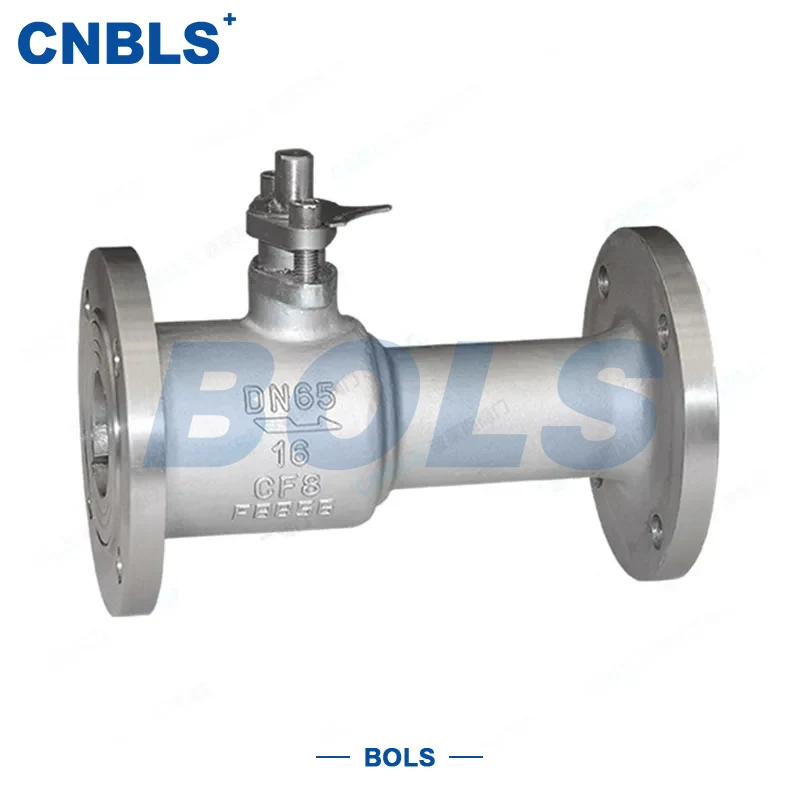
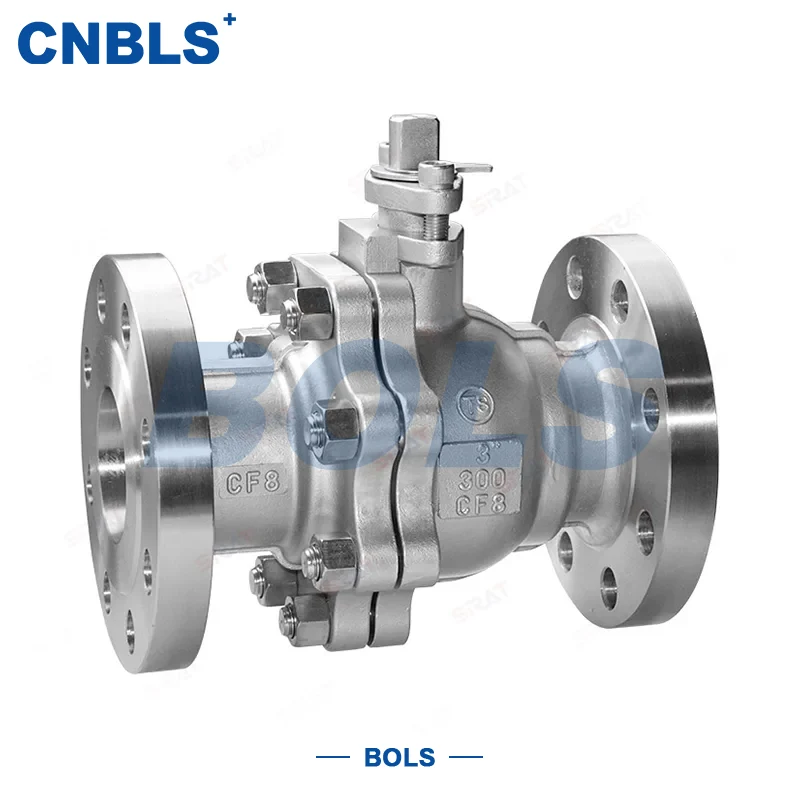
The port configuration and end connection are practical considerations that affect the valve's flow capacity and its ease of installation. The port configuration refers to the size of the bore through the ball. A full-port valve has a bore that matches the pipe diameter, offering the highest flow capacity and the lowest pressure drop. A reduced-port valve has a smaller bore, which makes the valve lighter and less expensive but increases the pressure drop. The end connection refers to how the valve is attached to the piping. The most common options are threaded, flanged, and butt weld. Threaded connections are suitable for small sizes and low pressures. Flanged connections are suitable for larger sizes and higher pressures, and they allow easy removal for maintenance. Butt weld connections are suitable for high-pressure and critical service, where a permanent, leak-tight joint is required. The table below summarizes the options.
| Option | Advantages | Disadvantages | Typical Application |
| Full Port | High flow, low pressure drop | Larger, heavier, more expensive | Main process lines, isolation |
| Reduced Port | Smaller, lighter, less expensive | Higher pressure drop | Utility lines, bypass lines |
| Threaded | Easy installation, no welding | Limited to small sizes, leak risk | Small-bore lines, instrument connections |
| Flanged | Easy removal, suitable for large sizes | More expensive, requires gaskets | Large-bore lines, maintenance access |
| Butt Weld | Permanent, leak-tight, high pressure | Difficult to remove | High-pressure, critical service |
At our factory, we manufacture Stainless Steel Ball Valves in full-port and reduced-port configurations, with threaded, flanged, and butt weld end connections. We work with our customers to select the configuration that best matches the piping design and the maintenance requirements. Our goal is to provide a valve that integrates seamlessly into the pipeline and delivers reliable performance over its service life.
5. What Testing and Certification Should Buyers Require?
Testing and certification are essential for verifying that a Stainless Steel Ball Valve meets the requirements of a chemical processing pipeline. The valve should be tested for shell integrity, seat leak-tightness, and, where applicable, fire safety. The shell test verifies that the valve body can withstand the rated pressure without leaking. The seat leak test verifies that the valve closes tightly. The fire test verifies that the valve maintains a seal after exposure to fire. The valve should also be certified to the relevant standards, such as API 6D, ISO 17292, or ASME B16.34. The table below summarizes the testing and certification requirements.
| Test / Certification | Purpose | Standard |
| Shell Test | Verifies body integrity | API 6D, ISO 17292 |
| Seat Leak Test | Verifies shutoff performance | API 6D, ISO 5208 |
| Fire Test | Verifies performance after fire | API 607, ISO 10497 |
| Material Certification | Verifies material composition | EN 10204 3.1 |
| NACE Compliance | Verifies resistance to sour service | NACE MR0175 / ISO 15156 |
At Zhejiang Bolaisi Valve Co., Ltd., our factory performs shell and seat leak testing on every Stainless Steel Ball Valve before shipment. We also offer fire-tested valves and NACE-compliant valves for sour service. We provide material certificates and test reports with every shipment. Our goal is to ensure that our customers receive valves that meet the most demanding requirements of chemical processing.
6. How Do You Evaluate a Stainless Steel Ball Valve Supplier?
Evaluating a supplier of Stainless Steel Ball Valves for chemical processing requires a focus on material certification, manufacturing capability, testing, and technical support. The supplier must provide material certificates with full traceability. They must have the capability to machine, assemble, and test valves to the required standards. They must perform shell and seat leak testing on every valve. And they must provide technical support to help you select the right valve for your application. The table below summarizes the evaluation criteria.
| Evaluation Criterion | What to Look For | Why It Matters |
| Material Certification | EN 10204 3.1 certificates | Ensures material meets specification |
| Manufacturing Capability | CNC machining, assembly, testing | Ensures consistent quality |
| Testing | Shell and seat leak testing | Verifies valve integrity |
| Fire-Safe Certification | API 607, ISO 10497 | Ensures performance in fire |
| Technical Support | Application engineering, selection | Helps choose the right valve |
At our factory, we have been producing Stainless Steel Ball Valves for over a decade. We provide EN 10204 3.1 material certificates, and we perform shell and seat leak testing on every valve. We offer fire-tested and NACE-compliant valves. Our technical team is available to assist with valve selection and application engineering. We invite you to evaluate us against these criteria and to consider us as your partner for Stainless Steel Ball Valves.
7. What Are the Key Product Parameters from Our Factory?
The following table provides the key product parameters for our Stainless Steel Ball Valves. These valves are designed for chemical processing pipelines and are available in a range of materials, seat options, and end connections. Our factory can also produce custom valves to meet specific requirements.
| Parameter | Specification Range | Notes |
| Size Range | DN15 - DN300 | Custom sizes available |
| Pressure Rating | PN10 - PN100 | Class 150 - 600 available |
| Material | 304, 316, Duplex 2205, Super Duplex 2507 | Selected for fluid compatibility |
| Seat Material | PTFE, PEEK, Metal | Selected for temperature and pressure |
| Port Type | Full port, Reduced port | Full port for high flow |
| End Connection | Threaded, Flanged, Butt Weld | Selected for piping system |
| Fire-Safe Option | API 607, ISO 10497 | Available on request |
| NACE Compliance | NACE MR0175 | Available for sour service |
| Operation | Manual, Pneumatic, Electric | Automated options available |
| MOQ | 50 pieces | Negotiable for large orders |
| Lead Time | 2 - 4 weeks | Depends on quantity and customization |
At our factory, we manufacture our Stainless Steel Ball Valves to meet these specifications and more. We can customize the size, pressure rating, material, seat, port type, and end connection to suit your specific requirements. Our quality control system includes inspection of raw materials, in-process inspection, and final inspection before shipment. Our goal is to provide our customers with high-quality Stainless Steel Ball Valves that meet the demands of chemical processing pipelines.
8. Frequently Asked Questions (FAQ)
Question 1: What is the difference between 304 and 316 stainless steel for ball valves in chemical processing?
Answer: Grade 304 stainless steel offers good corrosion resistance in mildly corrosive environments but is susceptible to chloride attack. Grade 316 contains molybdenum, which significantly improves resistance to chlorides and pitting corrosion. For chemical processing pipelines where chlorides or aggressive chemicals are present, grade 316 is generally the minimum specification. For high-chloride or high-temperature service, duplex or super duplex grades may be required.
Question 2: When should I specify a fire-safe ball valve?
Answer: Specify a fire-safe ball valve whenever the valve is installed on a flammable fluid service. In a chemical plant, a fire can occur due to a leak of flammable fluid, and the valve must be able to contain the fluid during and after the fire. Fire-safe valves incorporate a secondary metal seat and a graphite or metal stem seal that can withstand high temperatures. The most common fire-safe standards are API 607 and ISO 10497.
Question 3: What is the difference between PTFE and PEEK seats?
Answer: PTFE seats offer excellent chemical resistance and a wide temperature range, but they are limited to approximately 200°C. PEEK seats offer higher temperature and pressure limits, up to 250°C and 100 bar, but they are more expensive and may not be compatible with all chemicals. For high-temperature or high-pressure chemical service, PEEK is often the better choice.
Question 4: Can a stainless steel ball valve be used for throttling in a chemical process?
Answer: A standard ball valve is not designed for throttling. When partially open, the flow passes through a partially exposed bore, creating turbulence and potential cavitation that can damage the valve and downstream piping. For throttling applications, a globe valve or a specially designed control ball valve with a V-notch or characterized seat should be used.
Question 5: What testing should I require before accepting a stainless steel ball valve?
Answer: Require shell testing to verify body integrity, seat leak testing to verify shutoff performance, and material certification to verify the material composition. For flammable service, require fire testing to API 607 or ISO 10497. For sour service, require NACE MR0175 compliance. At Zhejiang Bolaisi Valve Co., Ltd., we perform shell and seat leak testing on every valve and provide material certificates with every shipment.
9. Conclusion
Selecting Stainless Steel Ball Valves for chemical processing pipelines requires a systematic approach that matches the valve to the specific fluid, temperature, pressure, and safety requirements. The material grade must be compatible with the chemical. The seat material must withstand the temperature and pressure. The fire-safe design must be appropriate for the fluid's flammability. The port configuration and end connection must match the piping design. And the testing and certification must verify that the valve meets the required standards. At Zhejiang Bolaisi Valve Co., Ltd., our factory manufactures Stainless Steel Ball Valves that meet these requirements. We offer a range of materials, seat options, and configurations, and we provide the testing and certification that chemical processors require.
Whether you are specifying valves for a new chemical plant or replacing valves in an existing line, we invite you to contact us to discuss your requirements. We can provide technical data, samples, and customized solutions. Our commitment to quality and customer satisfaction has made us a trusted partner for chemical processors around the world.
Contact Zhejiang Bolaisi Valve Co., Ltd. today to discuss your Stainless Steel Ball Valve requirements and discover how our valves can meet the demands of your chemical processing pipeline.
Next :
-
Related News
- What Factors Determine the Pressure Rating of Stainless Steel Ball Valves?
- What Makes Ball Valves Essential for Water Treatment and Desalination Plants?
- Basic Knowledge of Industrial Valves
- How Does the Ball Valve Achieve Zero Leakage with Soft Seat Sealing Materials?
- What Makes Ball Valves the Preferred Choice for High-Pressure and High-Temperature Services?
- How does Ball Valve maintain tight sealing under high-temperature conditions?
Leave me a message