
When Are Pneumatic Stainless Steel Ball Valves Suitable for Automated Process Lines?
An automated process line is built around repeatable actions. A valve must open when the sequence calls for it, close when the sequence calls for it, and report its position so that the control system knows the action has been completed. A manual valve breaks this loop. An electric valve can close the loop, but it may be slower or larger than the application allows. A pneumatic stainless steel ball valve is often the right answer when the duty is on/off isolation, the cycle frequency is high, the fluid is corrosive or hygienic, and the line requires a compact, fast-acting, fail-safe element that integrates with a PLC. The suitability is not universal. A pneumatic ball valve is a poor choice for fine throttling, for lines without clean dry air, or for applications where the actuator cannot be maintained.
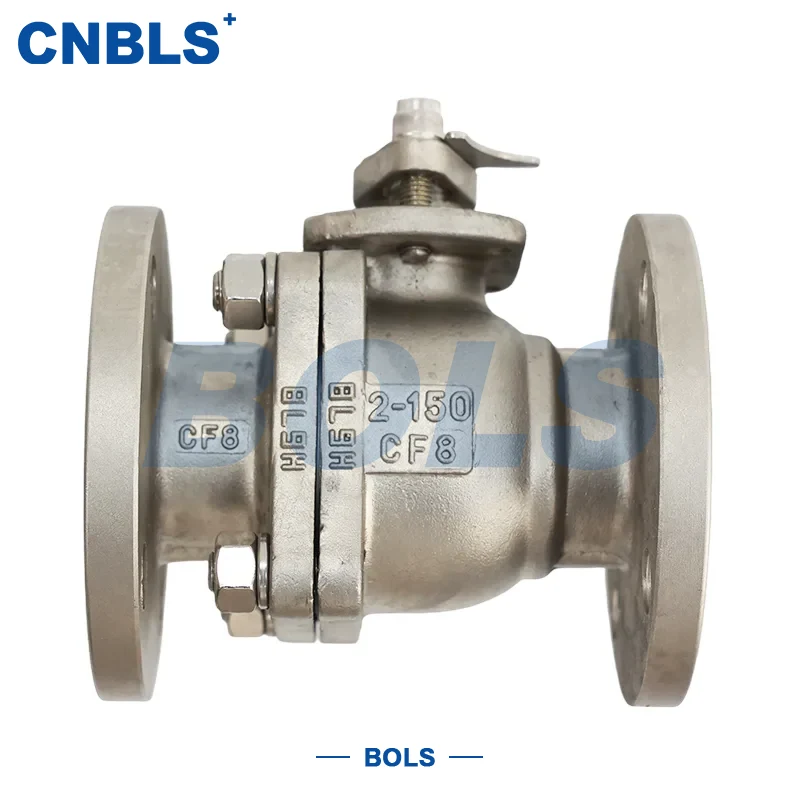
This guide is written for procurement teams who are selecting Stainless Steel Ball Valves for automated process lines. It identifies the conditions under which a pneumatic stainless steel ball valve is suitable, the conditions under which it is not, the specifications that determine performance, and the verification steps that should be completed before an order is placed. The content is organized around the decision points a buyer faces, and it includes the product parameters and documentation that a reliable supplier should provide. Our factory at Zhejiang Bolaisi Valve Co., Ltd. manufactures Stainless Steel Ball Valves with pneumatic actuation for process automation, and the guidance below reflects the engineering and procurement questions we address with our customers.
Table of Contents
- 1. What Automation Requirements Point to a Pneumatic Stainless Steel Ball Valve?
- 2. Why Does the Quarter-Turn Pneumatic Design Fit High-Cycle Process Lines?
- 3. How Do Stainless Steel Body and Seat Materials Match Aggressive or Hygienic Processes?
- 4. What Control and Feedback Accessories Make the Valve Automation-Ready?
- 5. When Should a Buyer Choose Electric or Manual Instead?
- 6. What Should Procurement Verify Before Ordering?
- 7. Frequently Asked Questions (FAQ)
- 8. Conclusion
1. What Automation Requirements Point to a Pneumatic Stainless Steel Ball Valve?
The first decision is a mapping exercise. The buyer should match the line requirement to the valve capability, and only proceed when the match is clear. The decision path below describes the sequence of questions that lead to a pneumatic stainless steel ball valve.
- Question 1 — Is the duty primarily on/off isolation? If the line needs to stop and start flow, isolate a branch, or divert a stream, the ball valve is a good fit. If the line needs continuous modulation, a control valve with a characterized trim is usually better.
- Question 2 — Is the cycle frequency high? If the valve operates many times per shift, a quarter-turn pneumatic actuator provides fast, repeatable cycles without the motor wear of an electric actuator.
- Question 3 — Is the fluid corrosive, hygienic, or both? If the fluid attacks carbon steel or requires cleanability, a stainless steel body with an appropriate seat material is the right construction.
- Question 4 — Does the line require a fail-safe position? If the valve must close (or open) on loss of air or power, a spring-return pneumatic actuator provides a simple, reliable fail-safe action.
- Question 5 — Is clean dry air available? If the plant has instrument air at the required dew point and filtration, the pneumatic actuator will perform reliably. If the air supply is wet or oily, the actuator and solenoid will fail prematurely.
- Question 6 — Is the control system able to command and monitor the valve? If the PLC can drive a solenoid valve and read a limit switch, the pneumatic ball valve integrates cleanly. If the line uses a fieldbus with smart valve diagnostics, an actuator with a positioner or a bus interface may be required.
The table below maps common automated line functions to the suitability of a pneumatic stainless steel ball valve.
| Line Function | Suitability | Reason |
| On/off isolation | High | Quarter-turn design, tight shut-off |
| High-cycle batch sequencing | High | Fast pneumatic actuation, durable seats |
| Corrosive chemical transfer | High | Stainless steel body, compatible seats |
| Hygienic clean-in-place | Moderate to high | Requires hygienic design and drainability |
| Fine flow modulation | Low | Standard ball valve is not a control valve |
| Low-air-quality plant | Low | Actuator and solenoid are vulnerable to wet or oily air |
Our factory at Zhejiang Bolaisi Valve Co., Ltd. works with automation integrators to confirm this mapping before a valve is specified. We supply Stainless Steel Ball Valves with pneumatic actuation and we help customers confirm that the duty, the air supply, and the control interface are compatible. The goal is to avoid a valve that is technically correct but operationally unsuitable.
2. Why Does the Quarter-Turn Pneumatic Design Fit High-Cycle Process Lines?
The quarter-turn pneumatic design fits high-cycle process lines because the valve closes and opens through a 90-degree rotation, and the actuator converts air pressure into that rotation with very few moving parts. A rack-and-pinion or a scotch-yoke actuator drives the stem directly, and the stroke is short. The result is a fast cycle, typically under one second for small valves and a few seconds for large valves, with a repeatable stroke that does not depend on the operator. The table below compares the cycle characteristics of pneumatic, electric, and manual ball valves.
| Parameter | Pneumatic Ball Valve | Electric Ball Valve | Manual Ball Valve |
| Typical actuation time | 0.5-3 s | 5-30 s | Operator dependent |
| Cycle repeatability | High | High | Low |
| Fail-safe action | Spring-return available | Battery backup or stored energy required | None |
| Footprint | Compact | Larger motor and gearbox | Handle clearance required |
| High-cycle durability | Excellent with quality actuator | Good, but motor and gear wear | Not suitable |
The high-cycle fit also depends on the seat design. A soft-seated ball valve provides tight shut-off but may wear faster under frequent cycling. A metal-seated ball valve is more durable but may have a higher leakage rate. The buyer should match the seat to the cycle count and the leakage requirement. Our factory at CNBLS supplies both soft-seated and metal-seated Stainless Steel Ball Valves and can advise on the seat selection for the expected cycle life.
For a buyer, the cycle life is a specification that should be stated in the purchase order. The supplier should provide the expected cycle count for the seat material and the actuator, and the maintenance interval for the actuator seals. A pneumatic ball valve that is correctly sized for the cycle duty is a reliable element in a high-cycle line. A valve that is undersized or fitted with an inadequate seat will become a maintenance burden.
3. How Do Stainless Steel Body and Seat Materials Match Aggressive or Hygienic Processes?
The stainless steel body and the seat material determine whether the valve is compatible with the process fluid. The body is typically 304 or 316 stainless steel, with 316 preferred for chloride-bearing or more aggressive fluids. The seat can be PTFE, RPTFE, PEEK, or a metal seat, depending on the temperature, the pressure, and the chemical compatibility. The table below provides a material selection matrix for common process conditions.
| Process Condition | Recommended Body | Recommended Seat | Procurement Note |
| Water and mild chemicals | 304 or 316 | PTFE or RPTFE | Standard configuration |
| Chloride-bearing fluids | 316 | PTFE or PEEK | Confirm chloride concentration |
| High temperature | 316 | PEEK or metal | Confirm temperature and pressure rating |
| Hygienic / CIP | 316L | PTFE or EPDM-backed | Requires hygienic design and drainability |
| Abrasive slurry | 316 | Metal or ceramic-lined | Consider a different valve type |
The body and seat selection is not only about corrosion. It is also about cleanability. A hygienic process line requires a valve that drains fully, has no dead pockets, and can be cleaned in place. A standard ball valve may have a cavity between the ball and the body that retains fluid. A hygienic ball valve is designed with a reduced cavity, a drainable orientation, and a surface finish that supports cleaning. The buyer should confirm the hygienic design if the line is subject to clean-in-place requirements.
Our factory at Zhejiang Bolaisi Valve Co., Ltd. manufactures Stainless Steel Ball Valves in 304, 316, and 316L, with PTFE, RPTFE, PEEK, and metal seats. We provide the material certificates and the seat compatibility data for each valve. The goal is to match the construction to the process fluid and the cleaning regime.
4. What Control and Feedback Accessories Make the Valve Automation-Ready?
The control and feedback accessories determine whether the valve can be integrated into the automated line. The minimum configuration is a solenoid valve to pilot the actuator and a limit switch box to report the open and closed positions. A higher configuration includes an air filter regulator, a speed control valve to adjust the stroke time, a manual override for maintenance, and a positioner or a bus interface for smart diagnostics. The table below presents the accessory configuration levels and their applications.
| Configuration Level | Accessories | Application |
| Basic | Solenoid valve, limit switch box | Simple on/off control with position feedback |
| Standard | Basic plus air filter regulator, speed control valves, manual override | Most automated process lines |
| Advanced | Standard plus positioner or bus interface, diagnostic sensors | Lines requiring modulation or predictive maintenance |
The accessories are not optional for an automated line. A valve without a limit switch cannot confirm its position to the PLC. A valve without a speed control may close too fast and create a water hammer. A valve without a manual override cannot be operated during a control system failure. The procurement specification should state the required accessory level and the signal interface. Our factory at Zhejiang Bolaisi Valve Co., Ltd. supplies Stainless Steel Ball Valves with the accessory configuration that matches the automation requirement, and we provide the wiring diagram and the signal specification for each configuration.
For a buyer, the accessory list is a useful checklist. A supplier that can provide the solenoid valve, the limit switch box, the air preparation, and the speed control as a matched assembly is a supplier that understands the automation interface. A supplier that provides only the valve body and leaves the accessories to the buyer is a supplier that may create an integration risk.
5. When Should a Buyer Choose Electric or Manual Instead?
A buyer should choose electric or manual instead of pneumatic when the line conditions do not match the strengths of the pneumatic design. The boundary conditions below describe the situations where a different choice is more appropriate.
- No clean dry air available: If the plant cannot provide instrument-quality air, the pneumatic actuator and solenoid will suffer from corrosion, sticking, and premature failure. An electric actuator avoids the air quality dependency.
- Very slow or precise modulation: If the line requires continuous flow control, a control valve with a characterized trim is the correct choice. A standard ball valve is not a control valve, even with a positioner.
- Very large valve size and high torque: For large diameters, the pneumatic actuator may become very large and the air consumption may be high. An electric actuator or a hydraulic actuator may be more practical.
- Remote sites without compressed air: If the valve is installed in a location where compressed air is not available, an electric actuator with a local power supply is the practical choice.
- Low cycle frequency and low criticality: If the valve is operated manually a few times per day and the line does not require remote control, a manual ball valve is the simplest and most economical choice.
The boundary conditions are not a criticism of the pneumatic design. They are a reminder that the correct valve is the one that fits the line. A pneumatic stainless steel ball valve is an excellent choice for high-cycle on/off isolation in a plant with clean air. It is a poor choice for a line without air or for a duty that requires modulation. Our factory at Zhejiang Bolaisi Valve Co., Ltd. helps customers evaluate these boundaries before a valve is ordered, and we can supply electric or manual alternatives when the pneumatic design is not the right fit.
6. What Should Procurement Verify Before Ordering?
Procurement should verify the valve, the actuator, the accessories, and the documentation as a single system. The checklist below provides the verification steps for a pneumatic stainless steel ball valve in an automated process line.
| Verification Step | What to Request | Acceptance Criterion |
| Duty confirmation | On/off duty, cycle frequency, fluid data | Matches the pneumatic ball valve capability |
| Body and seat material | Material certificates, seat compatibility | Matches the process fluid and temperature |
| Actuator sizing | Torque calculation with safety factor | Actuator output exceeds valve torque by 1.5x |
| Air supply requirement | Air pressure, dew point, filtration | Matches the plant instrument air |
| Accessory configuration | Solenoid, limit switch, speed control, manual override | Matches the control system interface |
| Seat leakage | API 598 or ISO 5208 test report | Rate A or specified class |
| Documentation | Wiring diagram, installation manual, certificates | Complete and traceable |
Our factory at Zhejiang Bolaisi Valve Co., Ltd. provides the torque calculation, the material certificates, the seat leakage report, and the accessory documentation for the Stainless Steel Ball Valves we supply. We also welcome customer audits and can provide samples for evaluation. The goal is to make the verification process transparent and to give buyers the evidence they need to confirm that the valve will perform in the automated line.
7. Frequently Asked Questions (FAQ)
Question 1: Can a pneumatic stainless steel ball valve be used for flow control?
Answer: A standard pneumatic stainless steel ball valve is designed for on/off isolation, not for continuous flow control. When the valve is partially open, the flow passes through a partially exposed bore, which can cause turbulence and inaccurate control. If the line requires modulation, a control valve with a characterized trim, or a V-notch ball valve with a positioner, should be selected instead.
Question 2: What air quality does a pneumatic ball valve actuator require?
Answer: The actuator requires clean, dry instrument air, typically at 4 to 8 bar, with a dew point low enough to prevent condensation at the lowest ambient temperature. The air should be filtered to remove particles and oil. A filter regulator is normally installed at the valve to protect the solenoid and the actuator. Wet or oily air is the most common cause of premature actuator and solenoid failure.
Question 3: How do I size the pneumatic actuator for my ball valve?
Answer: The actuator should be sized using a full-stroke torque calculation that includes the valve breakaway torque, the running torque, the seating torque, and the dynamic torque from the fluid flow. A safety factor of at least 1.5 is normally applied. The actuator output torque at the minimum air supply pressure should exceed the calculated torque. The supplier should provide the torque calculation for the specific valve and actuator combination.
Question 4: What is the difference between double-acting and spring-return pneumatic actuators?
Answer: A double-acting actuator uses air pressure to open and air pressure to close, so it requires air supply for both directions. A spring-return actuator uses air to open and a spring to close (or air to close and spring to open), so it provides a fail-safe position on loss of air. The choice depends on the line's safety philosophy. Spring-return is common for isolation valves that must close on air failure.
Question 5: What accessories are required to connect a pneumatic ball valve to a PLC?
Answer: The minimum accessories are a solenoid valve to pilot the actuator and a limit switch box to report the open and closed positions. The solenoid is driven by a PLC output, and the limit switch contacts are wired to PLC inputs. For speed control, add a speed control valve. For maintenance, add a manual override. The supplier should provide the wiring diagram and the signal specification for the selected configuration.
8. Conclusion
Pneumatic stainless steel ball valves are suitable for automated process lines when the duty is on/off isolation, the cycle frequency is high, the fluid requires a stainless steel body with a compatible seat, the line needs a fail-safe position, and the plant can provide clean dry air. They are not suitable for fine modulation, for lines without air quality control, or for very large sizes where the actuator becomes impractical. The selection should be based on the line function, the fluid, the cycle duty, the air supply, and the control interface. Our factory at Zhejiang Bolaisi Valve Co., Ltd. manufactures Stainless Steel Ball Valves with pneumatic actuation and supplies the torque calculation, the material data, and the accessory documentation that buyers need to verify the selection. If you are sourcing valves for an automated process line, contact our team to discuss your duty and control requirements.
Contact Zhejiang Bolaisi Valve Co., Ltd. today to discuss your Stainless Steel Ball Valves requirements for automated process lines and to request the torque, material, and accessory documentation for your application.
Related News
- How Can Stainless Steel Ball Valves Help Simplify Maintenance in Industrial Pipelines?
- Which Connection Type Suits Stainless Steel Ball Valves: Flanged, Threaded, or Welded?
- How Are Stainless Steel Ball Valves Selected for Chemical Processing Pipelines?
- What Factors Determine the Pressure Rating of Stainless Steel Ball Valves?
- What Makes Ball Valves Essential for Water Treatment and Desalination Plants?
- Basic Knowledge of Industrial Valves
Leave me a message
New Products

News Recommendations