
Which Connection Type Suits Stainless Steel Ball Valves: Flanged, Threaded, or Welded?
A piping engineer specifying Stainless Steel Ball Valves for a new process line has the valve body, the seat material, and the size selected. But the specification is not complete until the connection type is decided. Flanged, threaded, or welded: each option changes how the valve is installed, how it is maintained, and how it performs under pressure. A flanged valve can be removed with a wrench and a new gasket. A threaded valve can be installed without hot work, but it is limited in size and pressure. A welded valve offers the highest integrity and the lowest leak risk, but it requires cutting to remove. For a procurement manager, the connection type is not a minor detail. It determines the installation cost, the maintenance strategy, and the long-term reliability of the valve. This article compares the three connection types in practical terms, so that buyers can specify the right option for the application.
This guide is written for buyers who are sourcing Stainless Steel Ball Valves for industrial, commercial, or process applications. We will compare flanged, threaded, and welded connections across pressure rating, temperature rating, leak integrity, installation requirements, maintenance access, and cost. We will explain the scenarios where each connection type is the correct choice, and we will provide a selection checklist and supplier evaluation criteria. We will also provide detailed product parameters from our factory at Zhejiang Bolaisi Valve Co., Ltd. Whether you are specifying valves for a chemical plant, a water treatment facility, a food processing line, or a power plant, this guide will help you choose the connection type that best suits the application.
Table of Contents
- 1. What Are the Three Connection Types and How Do They Differ?
- 2. When Does Pressure and Temperature Rating Favor Welded or Flanged?
- 3. Why Does Maintenance Access Favor Flanged Connections?
- 4. How Do Installation Requirements Affect the Choice?
- 5. Which Connection Type Suits Which Application?
- 6. How Do You Evaluate a Stainless Steel Ball Valve Supplier?
- 7. What Are the Key Product Parameters from Our Factory?
- 8. Frequently Asked Questions (FAQ)
- 9. Conclusion
1. What Are the Three Connection Types and How Do They Differ?
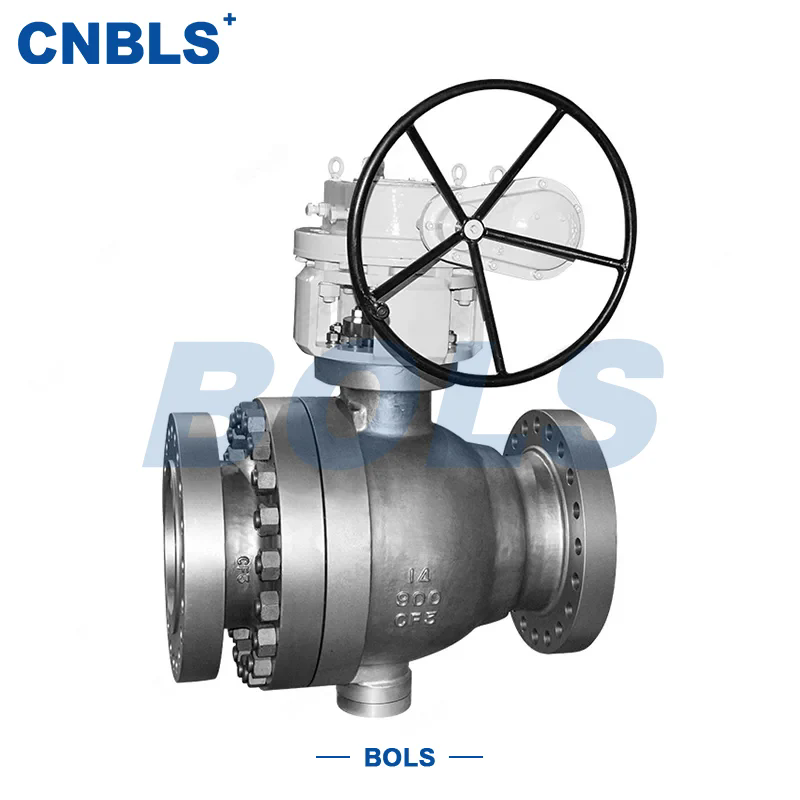
The three connection types for Stainless Steel Ball Valves differ in how the valve is attached to the pipe. A flanged valve has a flange on each end that bolts to a matching flange on the pipe. The seal is created by a gasket compressed between the two flanges. A threaded valve has internal or external threads that screw onto the pipe. The seal is created by thread engagement and a thread sealant. A welded valve has ends that are welded directly to the pipe. The seal is created by the weld, which is a permanent metallic bond. The table below summarizes the basic differences.
| Feature | Flanged | Threaded | Welded |
| Connection Method | Bolted flanges with gasket | Threaded pipe connection | Welded joint |
| Disassembly | Easy (unbolt) | Moderate (unscrew) | Difficult (cut) |
| Leak Path | Gasket joint | Thread spiral | None (welded) |
| Typical Size Range | DN15 - DN300 | DN8 - DN50 | DN15 - DN300 |
| Pressure Rating | Up to PN100 | Up to PN63 | Up to PN100+ |
At Zhejiang Bolaisi Valve Co., Ltd., our factory manufactures Stainless Steel Ball Valves in all three connection types. We understand that the connection type is determined by the application, not by a general preference. Our engineering team can help you select the right connection for your specific system.
2. When Does Pressure and Temperature Rating Favor Welded or Flanged?
Pressure and temperature rating favor welded and flanged connections over threaded connections. A welded connection is a continuous metallic bond with no gasket or thread path, so it can withstand the highest pressures and temperatures. A flanged connection is also suitable for high pressure and temperature, provided that the correct gasket material and bolting are used. A threaded connection is limited by the thread engagement and the sealant, and it is generally not used above PN63 or at elevated temperatures where the sealant may degrade. The table below compares the pressure and temperature capabilities.
| Parameter | Flanged | Threaded | Welded |
| Maximum Pressure | PN100 / Class 600 | PN63 / Class 300 | PN100+ / Class 600+ |
| Maximum Temperature | Depends on gasket (up to 500°C) | Depends on sealant (up to 200°C) | Depends on material (up to 500°C+) |
| Leak Integrity | High (with correct gasket) | Moderate | Highest |
| Best Suited For | High pressure, high temperature | Low pressure, low temperature | Critical, high-pressure service |
At our factory, we manufacture our Stainless Steel Ball Valves with flanged and welded connections for high-pressure and high-temperature applications. We can advise on the appropriate gasket material and bolting for flanged valves, and on the welding procedure for welded valves. Our goal is to provide valves that meet the pressure and temperature requirements of the system.
3. Why Does Maintenance Access Favor Flanged Connections?
Maintenance access favors flanged connections because a flanged valve can be unbolted and removed without cutting the pipe. This is important in applications where the valve must be inspected, repaired, or replaced periodically. A threaded valve can also be removed, but the process is slower and may damage the threads. A welded valve must be cut out, which requires hot work and a longer downtime. The table below compares the maintenance access of the three connection types.
| Parameter | Flanged | Threaded | Welded |
| Removal Time | Short (unbolt) | Moderate (unscrew) | Long (cut and re-weld) |
| Hot Work Required | No | No | Yes |
| Risk of Damage | Low | Moderate (thread damage) | High (pipe damage) |
| Best Suited For | Frequent maintenance | Occasional maintenance | No maintenance access required |
At Bolaisi, our factory manufactures flanged Stainless Steel Ball Valves for applications that require frequent maintenance access. We also supply gaskets and bolting to ensure a proper seal. Our goal is to provide valves that are easy to maintain and that minimize downtime.
4. How Do Installation Requirements Affect the Choice?
Installation requirements affect the choice of connection type in several ways. Flanged valves require the pipe to be flanged and the flanges to be aligned and bolted. This requires more space and more time than a threaded or welded connection. Threaded valves require the pipe to be threaded, which can be done on site with a pipe threader. Welded valves require a qualified welder and a welding procedure, which may not be available on site. The table below summarizes the installation requirements.
| Requirement | Flanged | Threaded | Welded |
| Pipe Preparation | Flange welding or threading | Pipe threading | Pipe beveling |
| On-Site Equipment | Wrenches, alignment tools | Pipe threader | Welding machine, qualified welder |
| Installation Time | Moderate | Short | Long |
| Skill Requirement | Moderate | Low | High |
At our factory, we provide installation guidance for our Stainless Steel Ball Valves. We can advise on the flange bolting torque, the thread sealant, and the welding procedure. Our goal is to help our customers install the valves correctly and efficiently.
5. Which Connection Type Suits Which Application?
The choice of connection type depends on the application. The table below provides a guide to matching the connection type to the application.
| Application | Recommended Connection | Reason |
| Chemical processing | Flanged or Welded | High pressure, leak integrity |
| Water treatment | Flanged | Maintenance access |
| Food and beverage | Flanged or Welded | Hygiene, cleanability |
| Small utility lines | Threaded | Low cost, easy installation |
| High-pressure gas | Welded | Maximum leak integrity |
| Marine | Flanged or Welded | Corrosion resistance, reliability |
At Zhejiang Bolaisi Valve Co., Ltd., our factory produces Stainless Steel Ball Valves in all three connection types and can advise on the best choice for your specific application. We work with our customers to understand their system requirements and to select the connection that delivers the best performance and reliability.
6. How Do You Evaluate a Stainless Steel Ball Valve Supplier?
Evaluating a supplier of Stainless Steel Ball Valves requires a focus on material quality, manufacturing capability, testing, and technical support. The supplier must use certified stainless steel and high-quality seats and seals. They must have the capability to machine, assemble, and test the valves to the required standards. They must perform pressure and leak testing on every valve. And they must provide technical support to help you select the right connection type and valve specification. The table below summarizes the evaluation criteria.
| Evaluation Criterion | What to Look For | Why It Matters |
| Material Quality | Certified stainless steel, traceability | Ensures corrosion resistance and durability |
| Manufacturing Capability | CNC machining, assembly, testing | Ensures dimensional accuracy and quality |
| Testing | Pressure test, seat leak test | Verifies valve integrity |
| Technical Support | Connection selection, application engineering | Helps choose the right valve |
| Project Experience | Industrial references | Demonstrates capability and reliability |
At our factory, we have been producing Stainless Steel Ball Valves for over a decade. We use certified materials, precision machining, and rigorous testing to ensure reliable performance. Our technical team is available to assist with connection selection and application engineering. We invite you to evaluate us against these criteria and to consider us as your partner for Stainless Steel Ball Valves.
7. What Are the Key Product Parameters from Our Factory?
The following table provides the key product parameters for our Stainless Steel Ball Valves. These valves are available in flanged, threaded, and welded connections to suit different applications. Our factory can also produce custom valves to meet specific requirements.
| Parameter | Specification Range | Notes |
| Connection Type | Flanged, Threaded, Welded | Selected for application |
| Size Range | DN8 - DN300 | Custom sizes available |
| Pressure Rating | PN10 - PN100 | Class 150 - 600 available |
| Material | 304, 316, 316L | Selected for corrosion resistance |
| Seat Material | PTFE, PEEK, Metal | Selected for temperature and pressure |
| Port Type | Full port, Reduced port | Full port for high flow |
| Operation | Manual, Pneumatic, Electric | Automated options available |
| Temperature Range | -20°C to +200°C | Depends on seat material |
| MOQ | 50 pieces | Negotiable for large orders |
| Lead Time | 2 - 4 weeks | Depends on quantity and customization |
At our factory, we manufacture our Stainless Steel Ball Valves to meet these specifications and more. We can customize the connection type, size, pressure rating, material, and operation to suit your specific requirements. Our quality control system includes inspection of raw materials, in-process inspection, and final inspection before shipment. Our goal is to provide our customers with high-quality Stainless Steel Ball Valves that meet their performance requirements.
8. Frequently Asked Questions (FAQ)
Question 1: Which connection type is best for high-pressure applications?
Answer: Welded connections are generally the best choice for high-pressure applications because the weld is a permanent metallic bond with no gasket or thread path that can leak. Flanged connections are also suitable for high pressure, provided that the correct gasket and bolting are used. Threaded connections are limited in pressure and are not recommended for high-pressure service.
Question 2: When should I choose a flanged connection over a welded connection?
Answer: Choose a flanged connection when you need maintenance access. A flanged valve can be unbolted and removed without cutting the pipe, which is important for applications where the valve must be inspected or replaced periodically. A welded valve is more permanent and requires cutting to remove, which is suitable for applications where maintenance access is not required.
Question 3: Are threaded connections suitable for stainless steel ball valves?
Answer: Threaded connections are suitable for small-size, low-pressure applications where hot work is not desired. They are commonly used in utility lines, instrumentation, and small process lines. However, they are limited in size and pressure, and they require a thread sealant. For high-pressure or high-temperature service, flanged or welded connections are preferred.
Question 4: How do I choose the right connection type for my application?
Answer: Consider the pressure and temperature, the maintenance requirements, the installation conditions, and the fluid characteristics. For high pressure and no maintenance access, choose welded. For high pressure with maintenance access, choose flanged. For low pressure and small size, choose threaded. Our technical team can help you evaluate your specific requirements and select the right connection type.
Question 5: Can a threaded valve be converted to a flanged valve?
Answer: A threaded valve cannot be converted to a flanged valve without replacing the valve body. The connection type is determined by the valve body design. If you need to change the connection type, you must select a valve with the desired connection. Our factory offers Stainless Steel Ball Valves in all three connection types, so you can select the one that suits your application.
9. Conclusion
The connection type of a Stainless Steel Ball Valve is a critical specification that affects pressure rating, temperature rating, leak integrity, installation, and maintenance. Flanged connections offer easy maintenance access and are suitable for a wide range of pressures and temperatures. Threaded connections are suitable for small, low-pressure applications where hot work is not desired. Welded connections offer the highest leak integrity and are suitable for critical, high-pressure service. By understanding the differences and matching the connection type to the application, buyers can specify a valve that delivers reliable performance and low maintenance. At Zhejiang Bolaisi Valve Co., Ltd., our factory manufactures Stainless Steel Ball Valves in all three connection types to the highest standards of quality.
Whether you are specifying valves for a chemical plant, a water treatment facility, a food processing line, or a power plant, we invite you to contact us to discuss your requirements. We can provide samples, technical data, and customized solutions. Our commitment to quality and customer satisfaction has made us a trusted partner for Stainless Steel Ball Valve buyers around the world.
Contact Zhejiang Bolaisi Valve Co., Ltd. today to discuss your Stainless Steel Ball Valve requirements and discover how our connection options can meet your piping system needs.
Related News
- How Can Stainless Steel Ball Valves Help Simplify Maintenance in Industrial Pipelines?
- When Are Pneumatic Stainless Steel Ball Valves Suitable for Automated Process Lines?
- How Are Stainless Steel Ball Valves Selected for Chemical Processing Pipelines?
- What Factors Determine the Pressure Rating of Stainless Steel Ball Valves?
- What Makes Ball Valves Essential for Water Treatment and Desalination Plants?
- Basic Knowledge of Industrial Valves
Leave me a message
New Products


News Recommendations